ENTAME [3/3] – AT YOUR EARLIEST CONVENIENCE
A proposal and text by Federica Martini and Samuel Schellenberg
During an informal conversation in 2013, Petra Köhle and Nicolas Vermot-Petit-Outhenin heard about the gifts offered to the Palais des Nations in Geneva. A series of art and design objects had reportedly been requested from the member countries of the League of Nations to furnish the new headquarters of this international organization. The League of Nations, whose founding charter had been signed in the Hall of Mirrors at the Palace of Versailles on June 28, 1919, had its representative headquarters built between 1929 and 1937 in the Sécheron district, in the heart of what is now known as International Geneva.
As was customary in the symbolic palaces of political power, diplomatic gifts were sent by states to emphasize friendships, mark the end of conflicts, or give international visibility to commemorative events associated with specific nations. But what could one offer as a gift to a supranational organization founded at the end of the First World War with the aim of preserving peace, and dissolved in 1946 at the end of the Second World War? And what effect, if any, might these aesthetic artifacts have had on the delicate peace negotiations they silently witnessed in the halls, offices, and corridors of the Palais des Nations ?
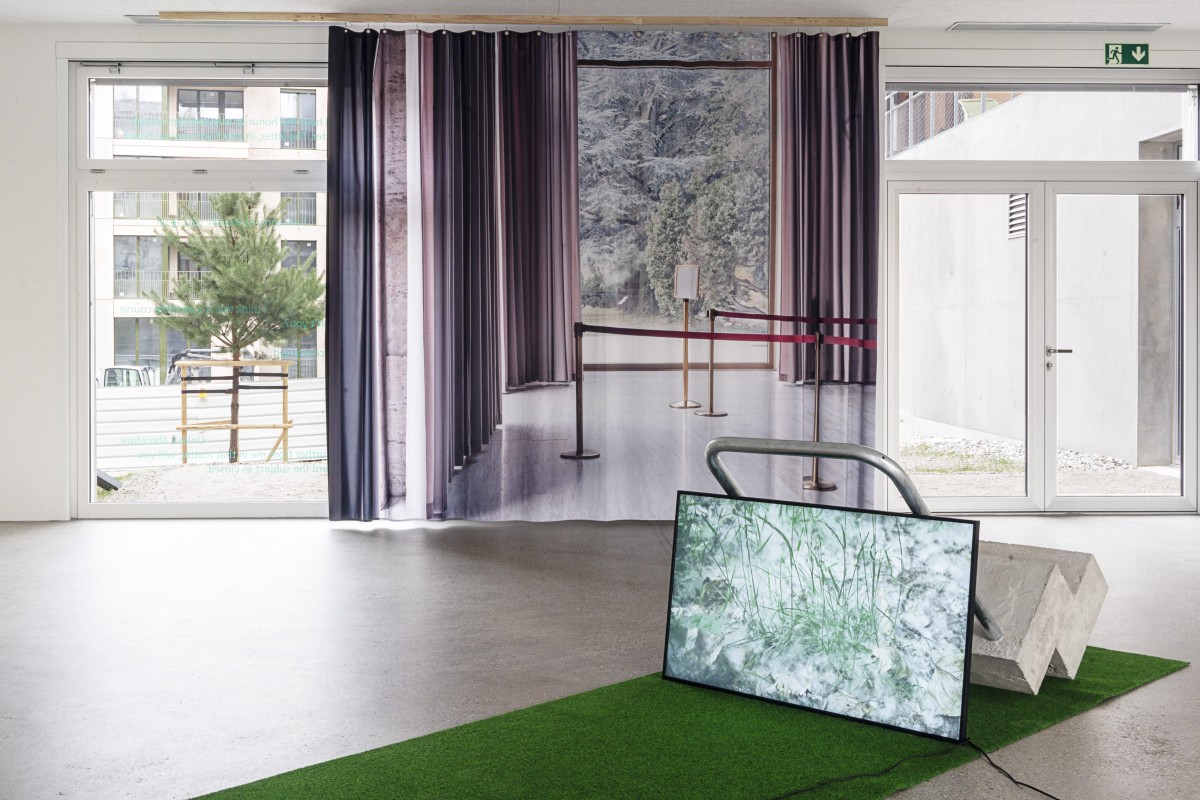
Exhibition view "AT YOUR EARLIEST CONVENIENCE", 2023, CALM – Centre d'Art La Meute, photo : Raphaël Cuomo.
In 2014, Köhle & Vermot visited the UN archives in Geneva. Guided by the archivist Jacques Oberson, they identified a series of files containing information on each of the art and design gifts offered by member states to the League of Nations. The files are organized under the name of the donor country, and an inventory records the various accepted gifts. The artists read exchanges with architects about finding suitable placements for objects designed for specific locations, budget constraints, and attempts to manage construction delays.
Then appear the gifts that were refused, never realized, or whose transactions were halted for major reasons. Köhle & Vermot’s research quickly turned to the historical events surrounding this dense period, where the decoration of the Palais des Nations unfolded alongside the policies pursued by the League of Nations. A commemorative plaque bearing a phrase by Simón Bolívar, proposed by a group of Latin American countries, but never realized. The stinkwood paneling offered by South Africa for a meeting room, revealing colonial ideologies. A wallpaper celebrating a historical vision of Austria, contested by Turkey and Poland. The missing gift from Fascist Italy, whose production was interrupted following human rights violations in Ethiopia. The Assembly Hall fresco, offered by Republican Spain but later inaugurated by the dictator Franco.
In Köhle & Vermot’s work, the furniture of the Palais des Nations, as well as all the accepted and refused gifts, bear witness both to the artistic and industrial expertise of the donor countries and to the insoluble aesthetic and political conflicts underlying international dynamics.
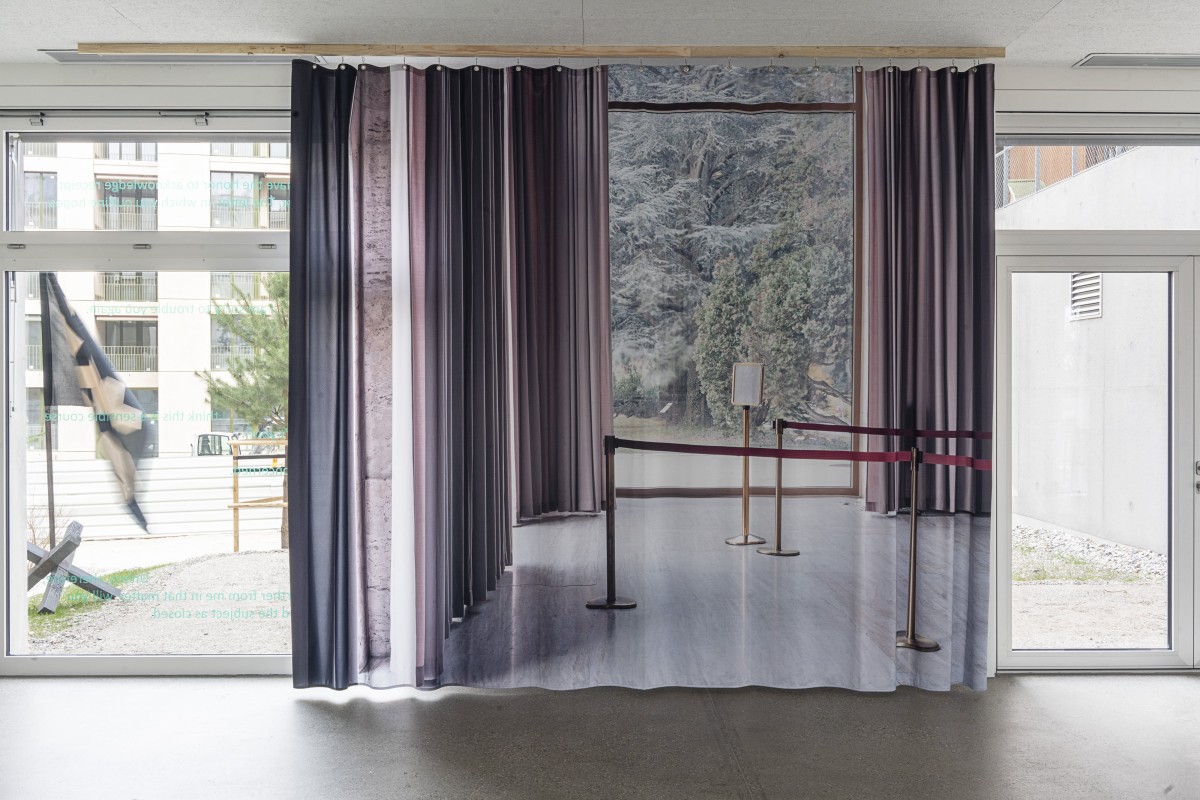
Exhibition view "AT YOUR EARLIEST CONVENIENCE", 2023, CALM – Centre d'Art La Meute, photo : Raphaël Cuomo.
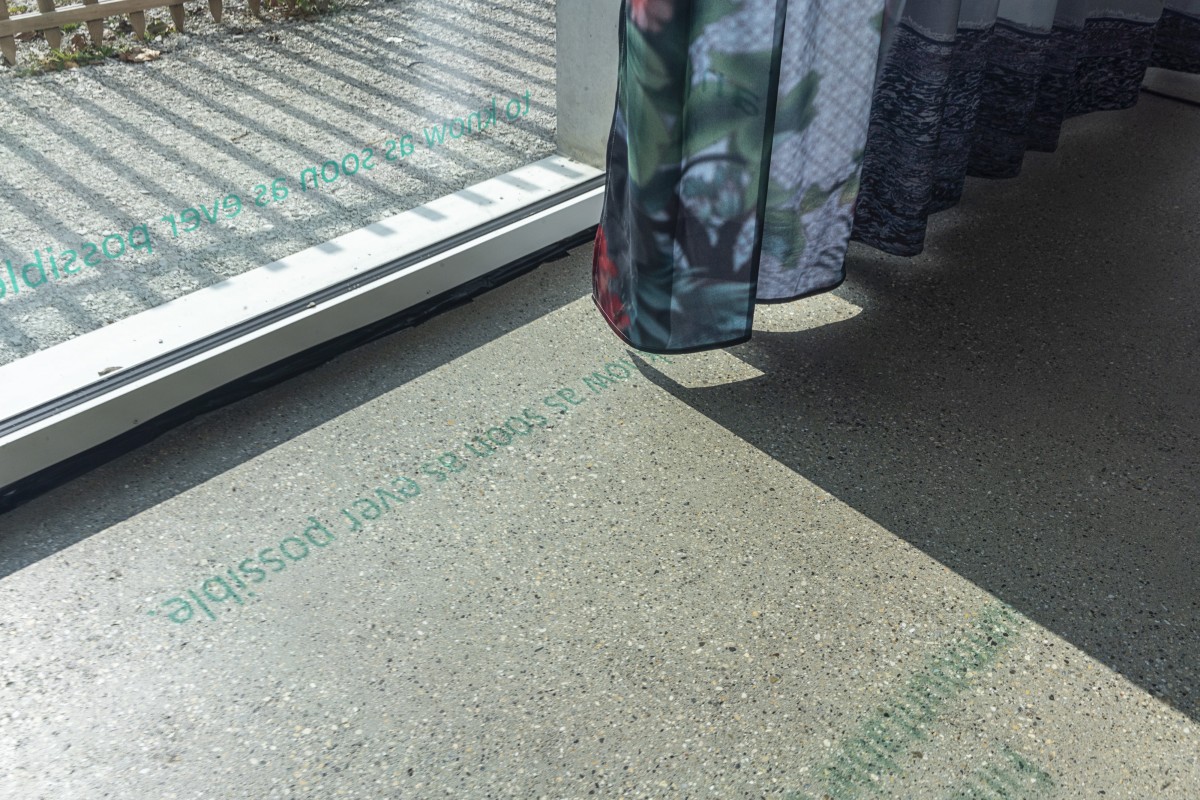
Exhibition view "AT YOUR EARLIEST CONVENIENCE", 2023, CALM – Centre d'Art La Meute, photo : Raphaël Cuomo.
The gifts and the vast constellation of concepts associated with them—including the materiality of the archive, the ambiguous superficiality of diplomatic language, and indifference—are approached by Köhle & Vermot from the perspective of fact. Their investigation is conducted through video and photography, which, rather than merely recording an objective reality, reveal how events are made present, absent, or overexposed depending on the installation or removal of the gifts.
Through the curtains hung in the windows of CALM’s art space, we see empty and unremarkable rooms of the Palais des Nations, suggesting the successive movements of art and design gifts. Their colors are pop. The images fold into the pleats of the curtains; our gaze completes them. They suggest and make visible the changing uses of the palace’s architecture and the corresponding geopolitical upheavals, traces of which are preserved in the UN archives through administrative documents: invoices, sketches, internal notes, minutes, and official letters.
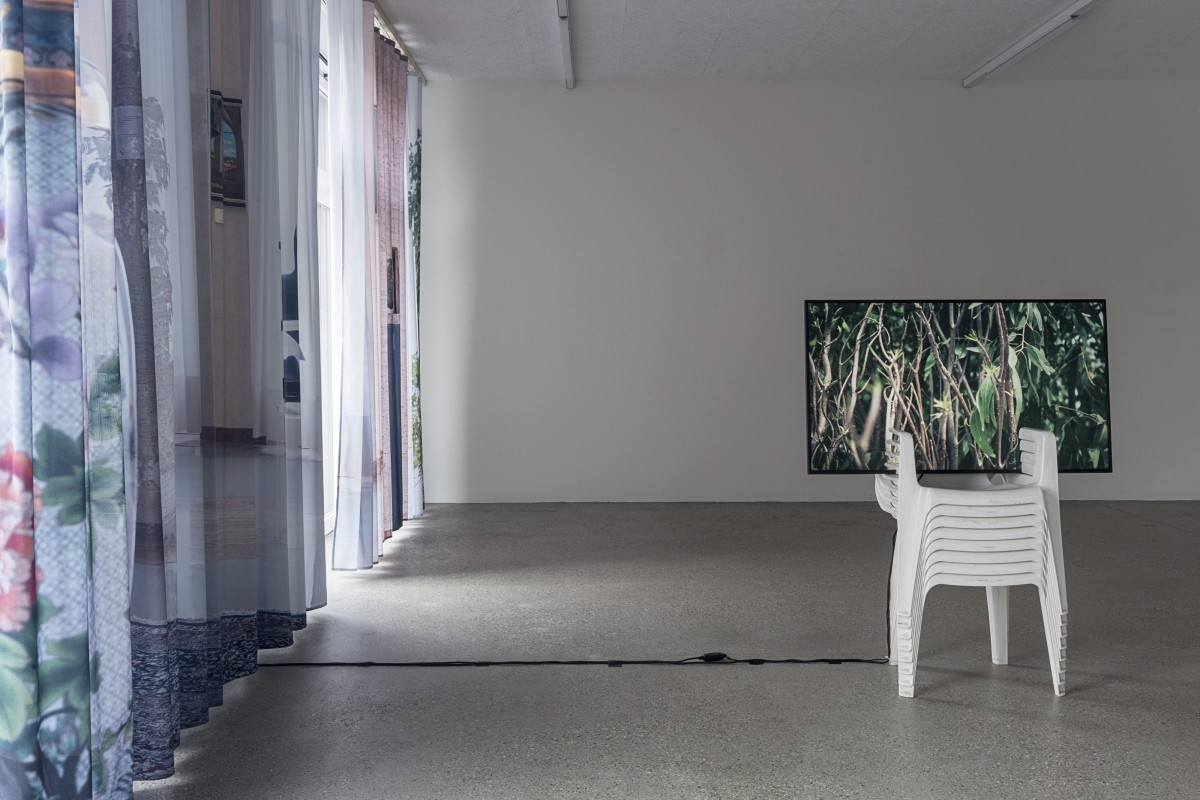
Exhibition view "AT YOUR EARLIEST CONVENIENCE", 2023, CALM – Centre d'Art La Meute, photo : Raphaël Cuomo.
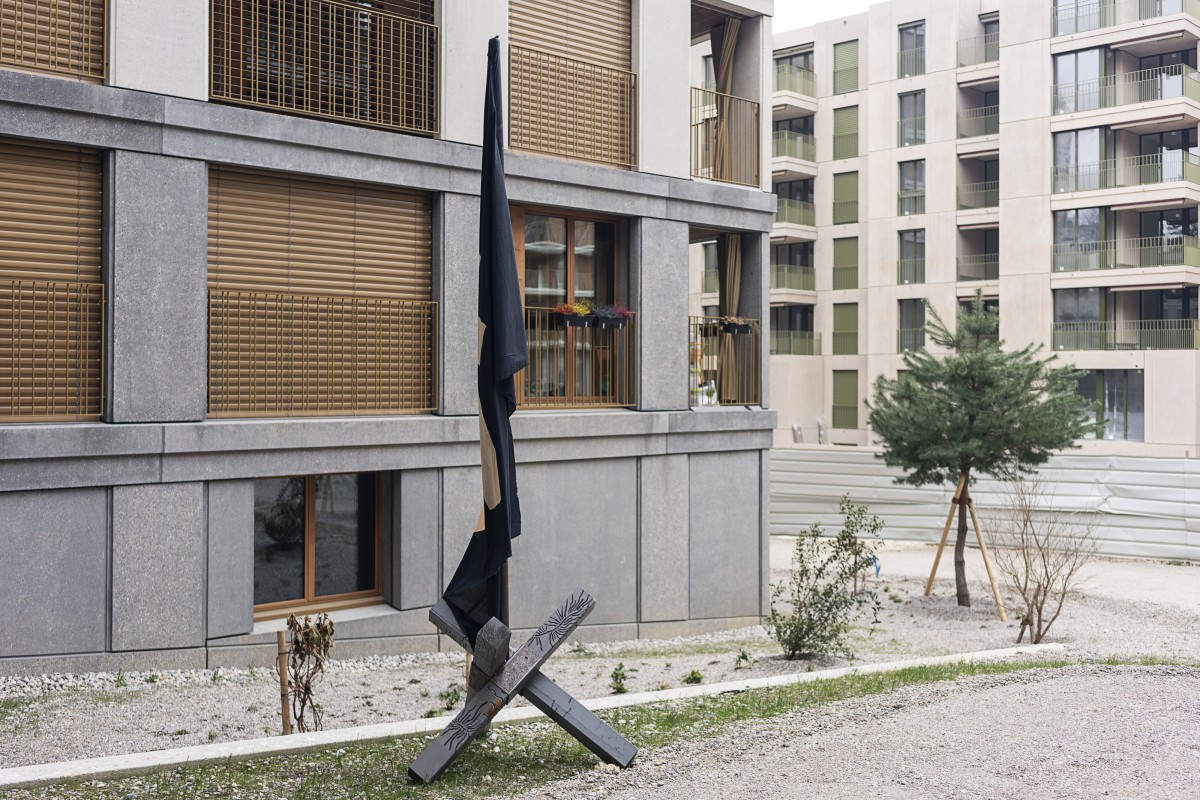
Exhibition view "AT YOUR EARLIEST CONVENIENCE", 2023, CALM – Centre d'Art La Meute, photo : Raphaël Cuomo.
When the missing gifts left tangible gaps in the architecture, Köhle & Vermot listen to the whispers they left between the lines of the archival files. For works that have remained in their original locations since the 1930s, the artists record the reasons for their permanence and the sensitive international relations of which these artifacts are symptoms. In the video It remains to be seen if [...] and if it will be (2021), the title itself expresses the tension between absence and presence, using the conditional form of diplomatic language. Köhle & Vermot approach these elliptical formulations as linguistic automatisms. Within the mechanics of a language saturated with demonstrative pronouns to avoid naming politically sensitive objects, they detect smudges and emotions. Anxiety emerges in the opening line: “I am sorry to trouble you again.” In the vigilance of: “Unless, therefore, you hear further from me in that matter, will you kindly regard the subject as closed.” In the tense caution of: “I beg to acknowledge and to thank you for your letter of March 28, which was only received here on April 18, and must therefore have crossed my letter to you of April 5 which I hope you have now received.”
Each of these sentences, incapable of definitively closing the subject, opens potentials and escape routes. Diplomatic protocols lend themselves to the subjective adjustments of officials working in wartime: “You will understand, I am sure, the pressure of work at such times.” The sentences, gathered from UN files related to the Palais des Nations gifts, are here revealed—indeed, disclosed—on the windows of CALM’s art space. The vinyl phrases are visible during the day, on the glass or in their reflection cast onto the floor by the light. They are interrupted, and the gaps in the composition make palpable the waiting for a response that never came, the delays, and the interruptions in communication. Some of these silences correspond to years of waiting, which the work condenses into the space of four windows.
– Federica Martini
The project by Petra Köhle & Nicolas Vermot-Petit-Outhenin stems from the research EPoD – Political Aesthetics of the Gift at the Palais des Nations, conducted at EDHEA – School of Design and Fine Arts of Valais.