All my loved ones like to fight
A proposal and text by Oriane Emery & Jean-Rodolphe Petter
CALM – Centre d’Art La Meute opens its new season with a group exhibition featuring nine artists who share, among other things, two commonalities: writing and the city of Lausanne. All of them have lived and worked there at some point in their lives (or still do). As for writing, it is engaged, activist, and subversive. Through numerous discussions, work sessions, and parties, the group came together. The exhibition took shape. Its title reflects, on one hand, the connection we maintain with the artists and people involved in this project, and on the other, its curatorial ambition.
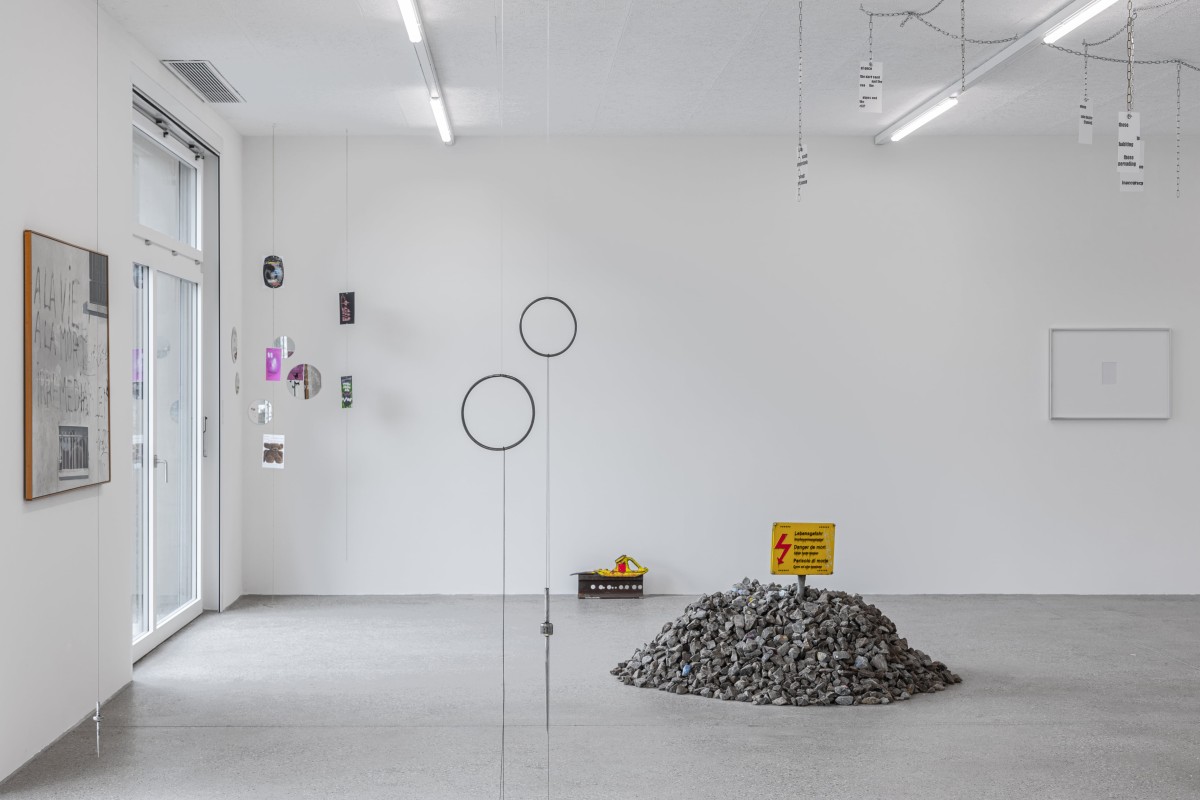
Exhibition view "All my loved ones like to fight", 2023, CALM – Centre d'Art La Meute, photo : Théo Dufloo.
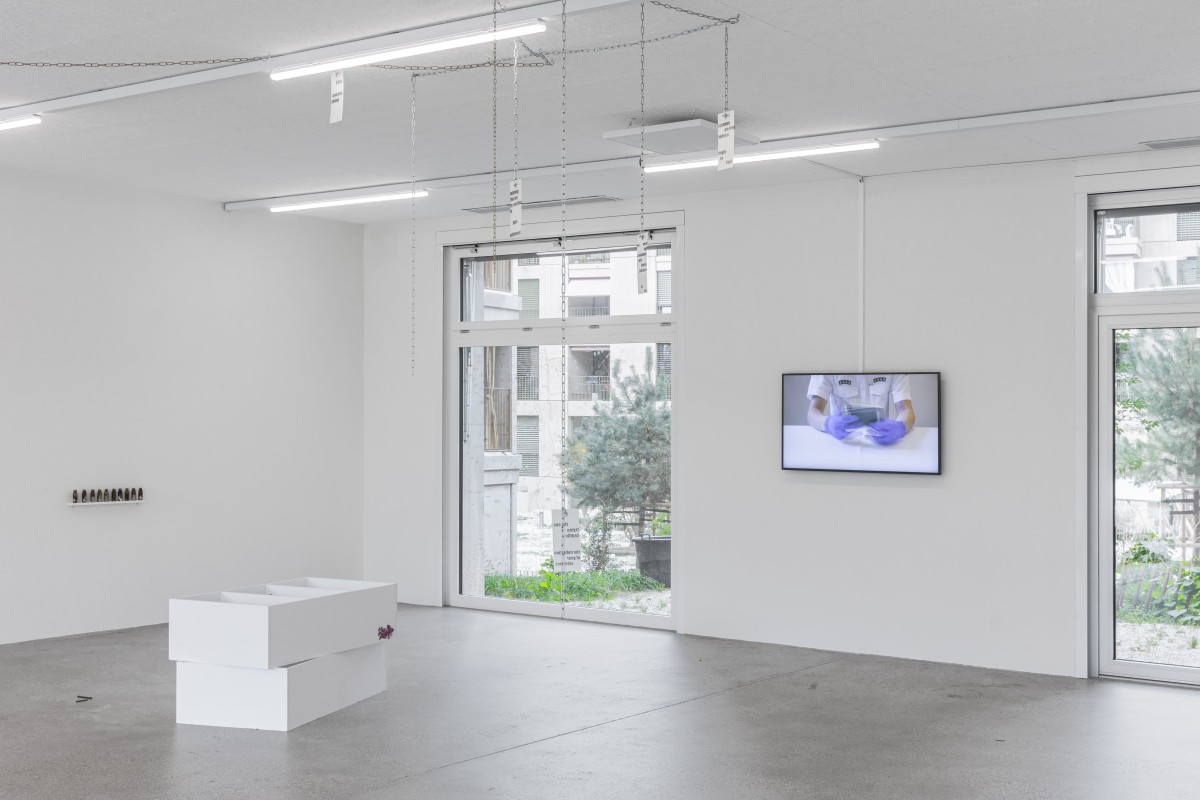
Exhibition view "All my loved ones like to fight", 2023, CALM – Centre d'Art La Meute, photo : Théo Dufloo.
"All my loved ones like to fight" brings together works that establish a close connection with the psyche of the invited artists. Don’t be mistaken: what you see encompasses both shadow and light, obsessions as well as desires, sensitivities as well as rejections. “I love your face too much when you fuck” (Mahalia Taje Giotto), “Do you also feel their scornful bitterness and acidic melancholy?” (Nayansaku Mufwankolo), “To life, to death, irrevocably” (Émilienne Farny). As these phrases and quotes unfold throughout the exhibition space, they prompt us to reflect on how we navigate daily struggles. Perhaps you heard, very young, the phrase “Life is a battle”? From the perspective of a child to the experiences of adulthood, countless turns and intersections emerge.
Through this exhibition and its program of podcasts and diverse events (artist talks, roundtables, and workshops), CALM – Centre d’Art La Meute seeks to initiate a dialogue with its neighborhood and audience about what connects us. Titled “Is there anything more exciting than writing your own story?”, the annual theme encourages exchange and sharing through the personal, the popular, the political, and the humorous.
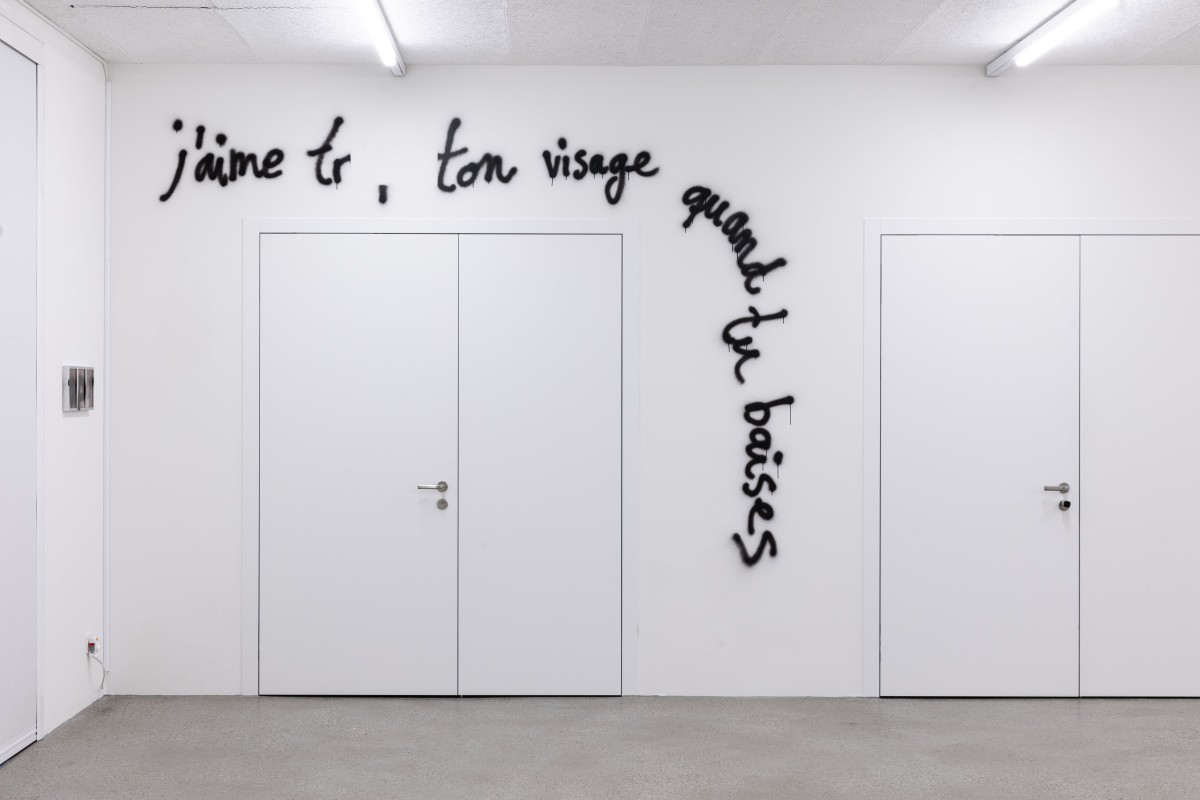
Mahalia Taje Giotto, Existential Boner, 2023, photographs and graffiti, variable dimensions, photo : Théo Dufloo.
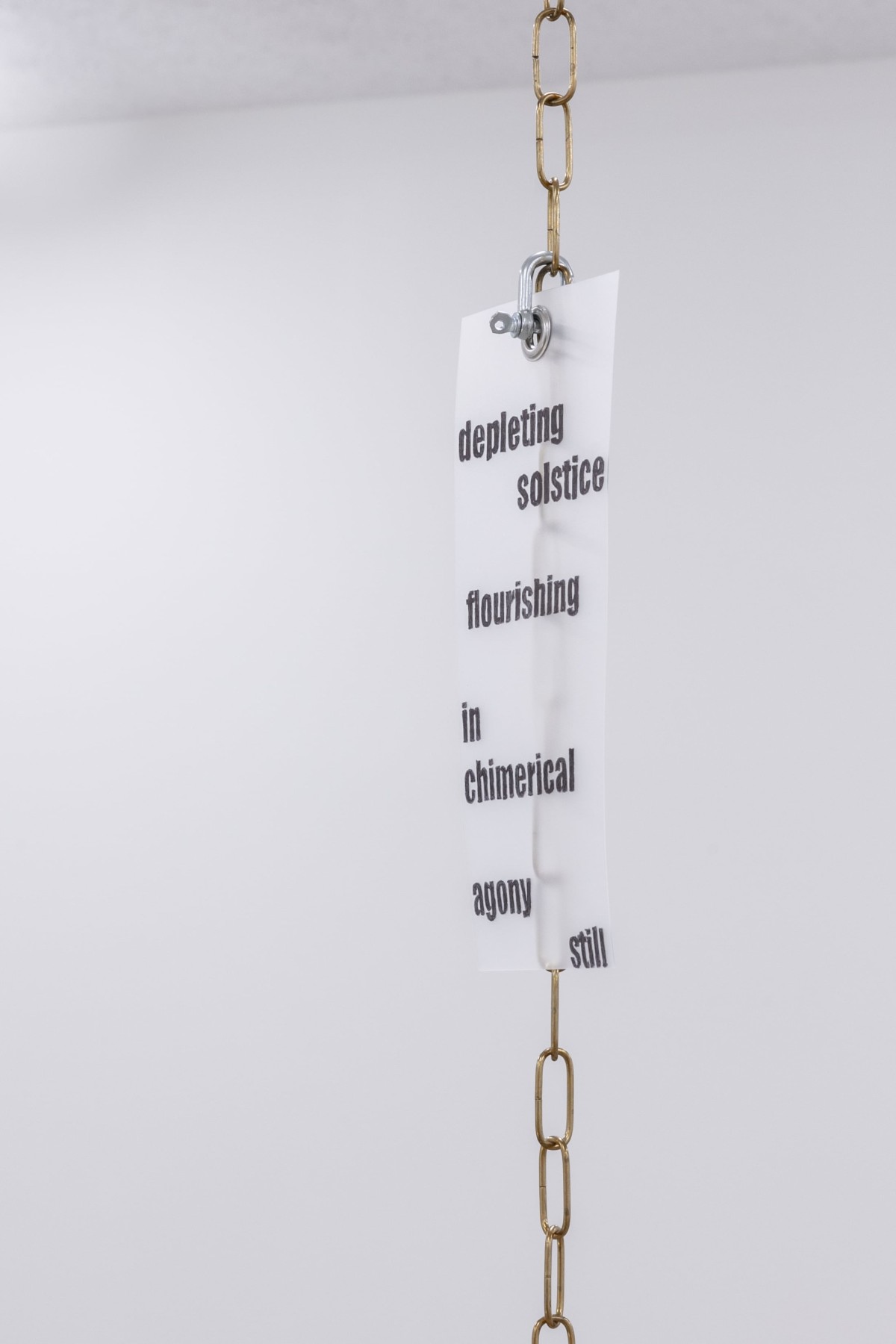
Nayansaku Mufwankolo, At once the dark sand and the sea, the abyss andthe cliff, detail, 2023, chains, rigid translucent paper, and felt-tip pen, variable dimensions, photo : Théo Dufloo.
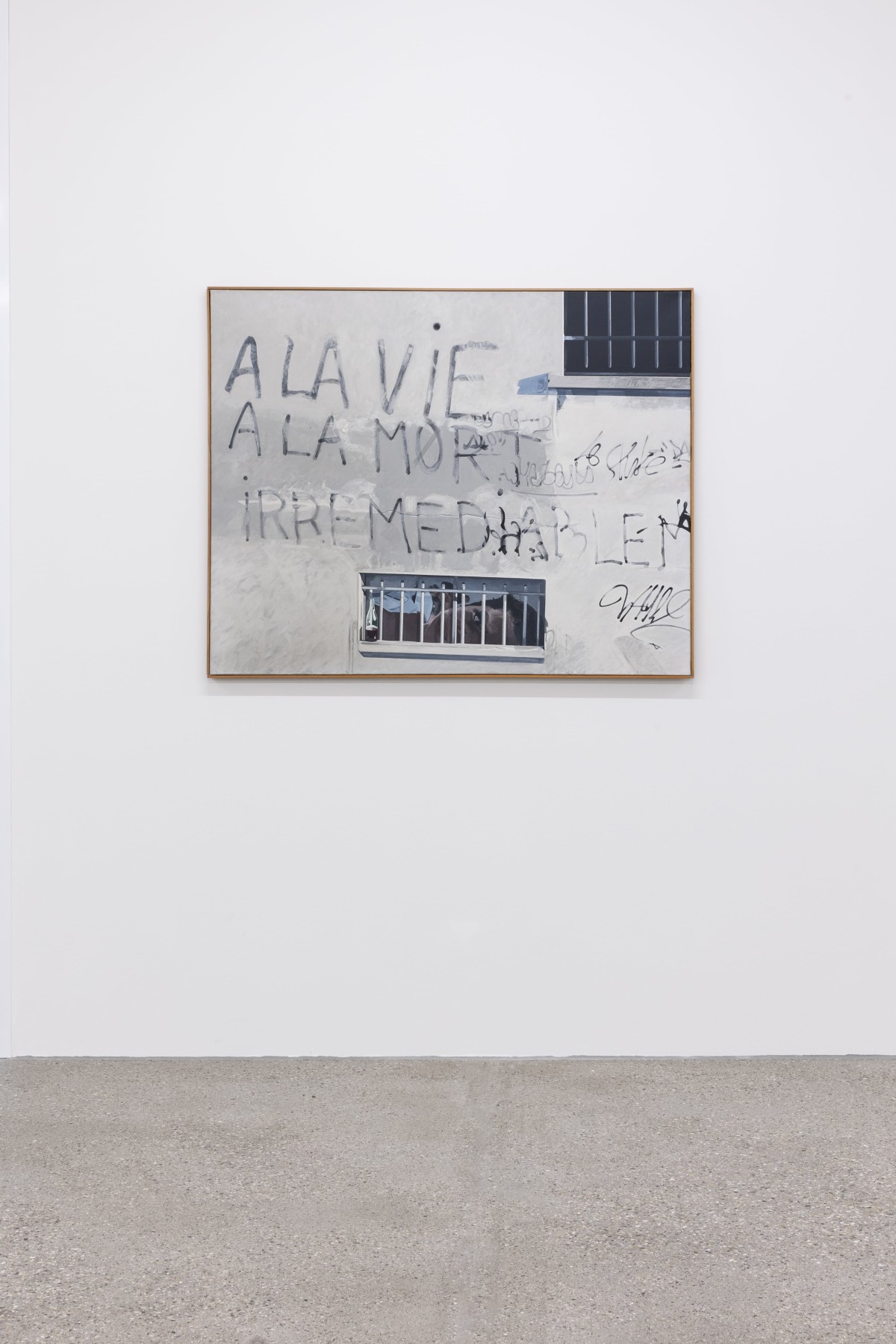
Émilienne Farny, Graffiti no 4, 1994, acrylic on canvas, 100 x 135 cm, photo : Théo Dufloo.
In addition to Émilienne Farny’s (1938–2014) painting depicting a street in Lausanne covered with inscriptions in 1994, probably located in the Flon area due to its historical connection with graffiti in Lausanne, the exhibition features photographs and graffiti by Mahalia Taje Giotto, Nayansaku Mufwankolo’s Afrocosmic poem (unlike Afrofuturism, where the redefinition of culture and the conception of Black community are based on a projected future on Earth, Afrocosmic thought explores other space-time dimensions related to quantum physics), as well as a performance by Garance Bonard, announced through an intimate installation of mirrors and brass chains.
Grandee Dorji presents a video augmented by an intervention on one of the exhibition space’s windows. Composed of handmade stamps, the artist plays the role of an immigration officer in his video (a French translation is available on the last page of this dossier). At the entrance of the exhibition space, two drawings by Luca Frati are displayed. These works depict the artist’s universe, where gender (male–female) is no longer a biological foundation. During the opening, his performance narrates the vicissitudes of love in our society. The obsession and passion mentioned earlier, resonating with the phrase spray-painted by photographer Mahalia Taje Giotto, are also evident in KVALEE. The accomplished graffiti artist from Lausanne has left his mark on the Vaud capital. Here, he does not express himself through graffiti but through a reference to the urban environment inherent to this practice.
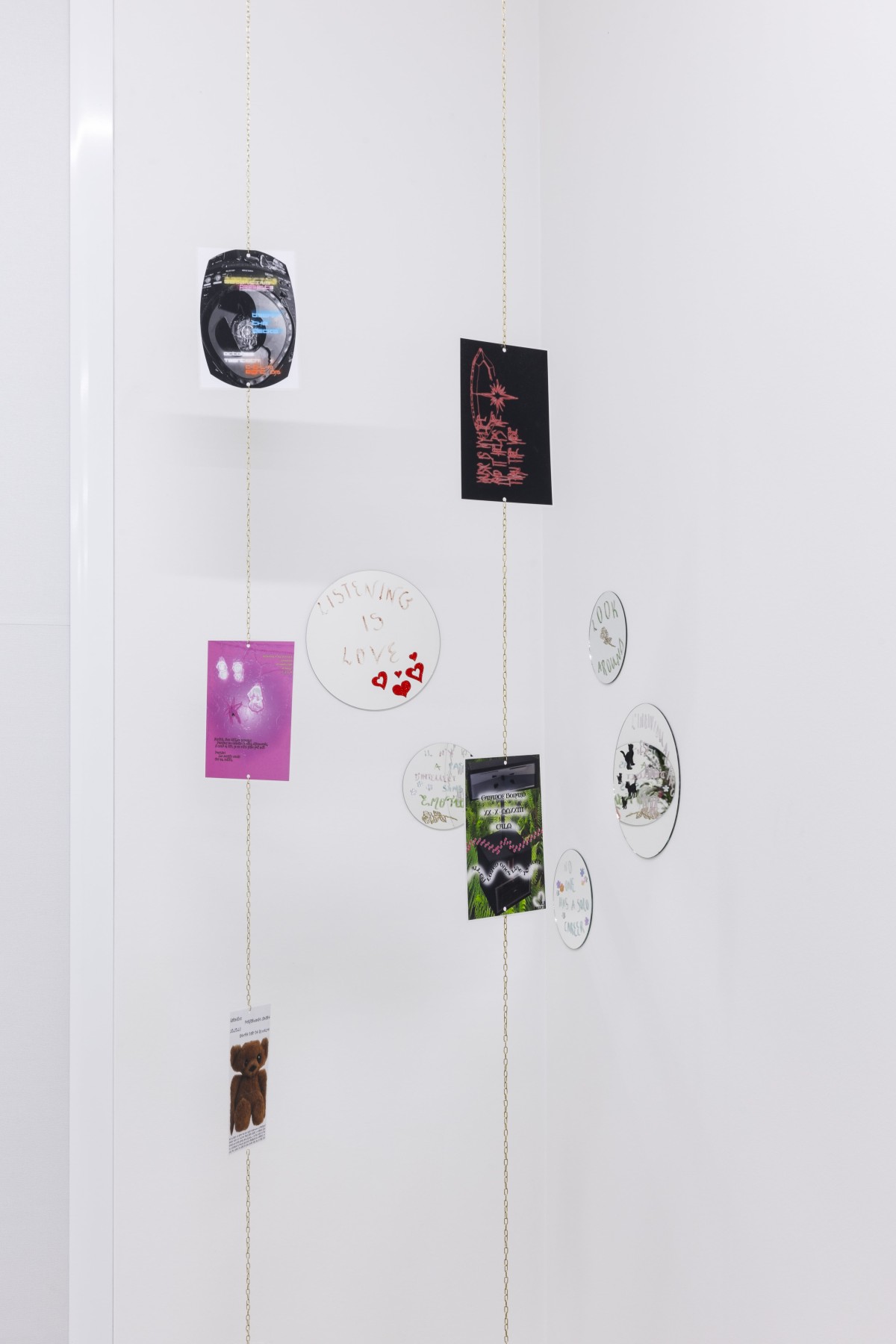
Garance Bonard, Don’t look at yourself, 2023, mirrors, stickers, makeup, variable dimensions, photo : Théo Dufloo.
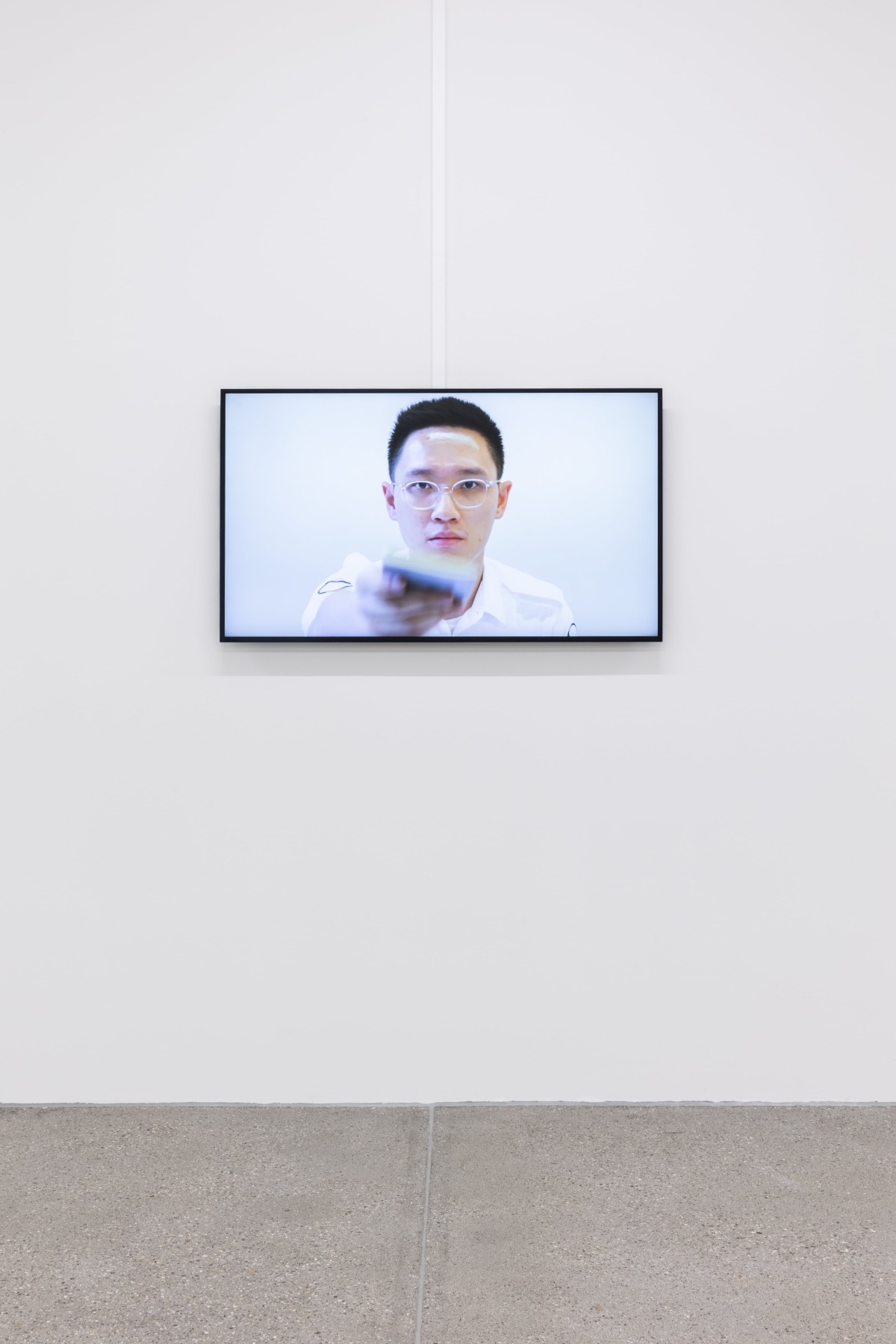
Grandee Dorji, Papers, please, 2023, video and stamps, duration 10 min, photo : Théo Dufloo.
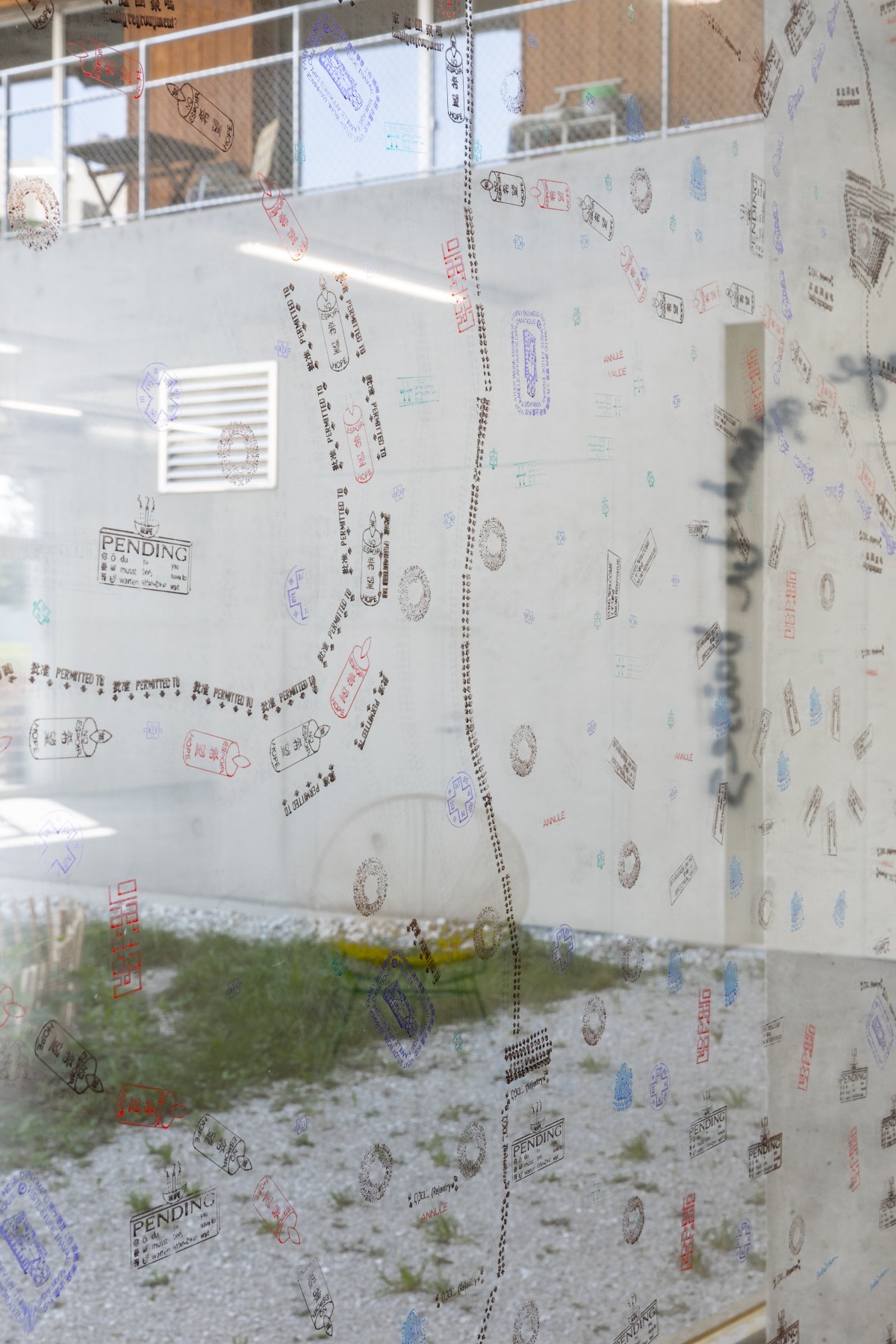
Grandee Dorji, Papers, please, 2023, video and stamps, duration 10 min, photo : Théo Dufloo.
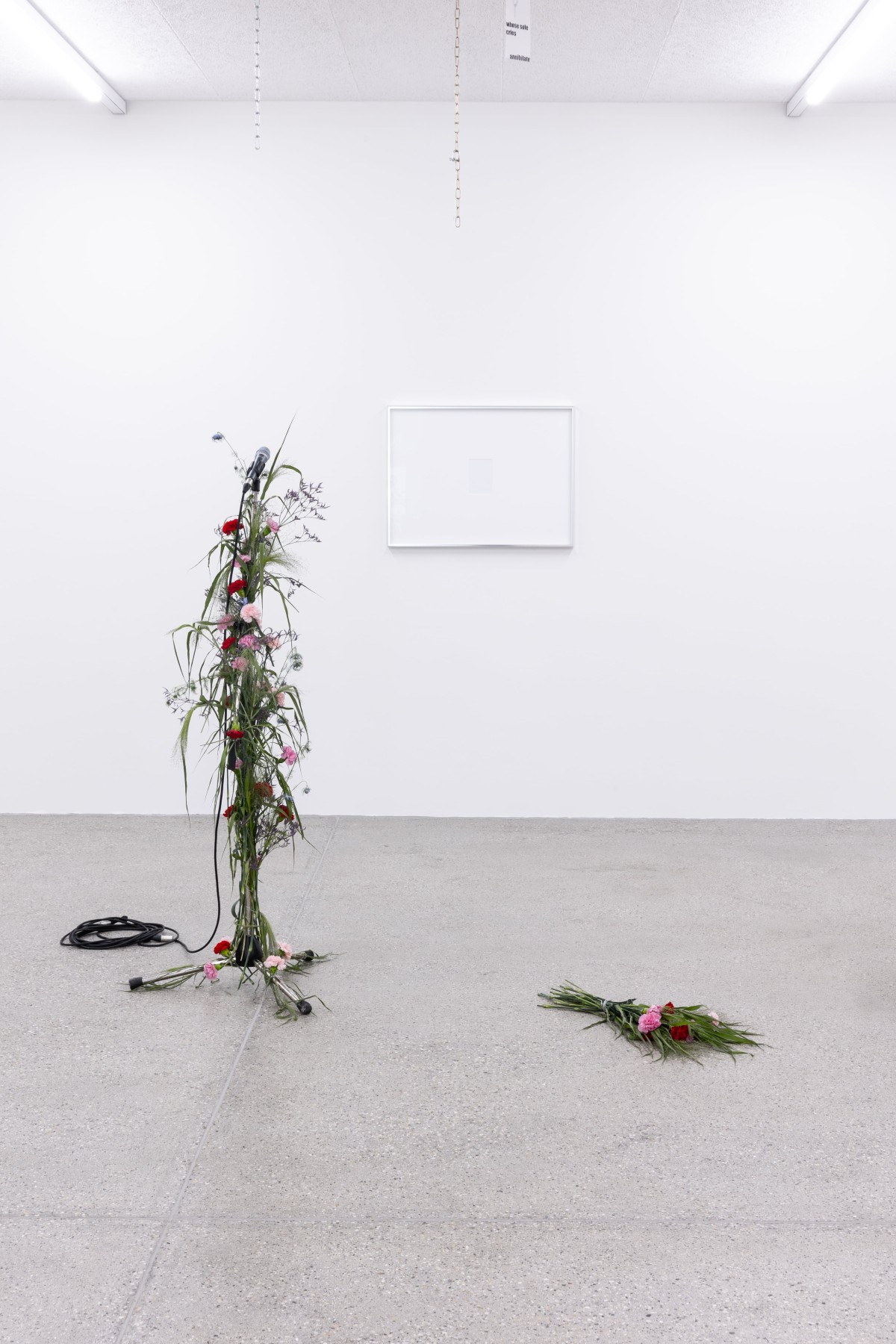
Exhibition view "All my loved ones like to fight", Luca Frati (floor), Tara Ulmann (wall), 2023, CALM – Centre d'Art La Meute, photo : Théo Dufloo.
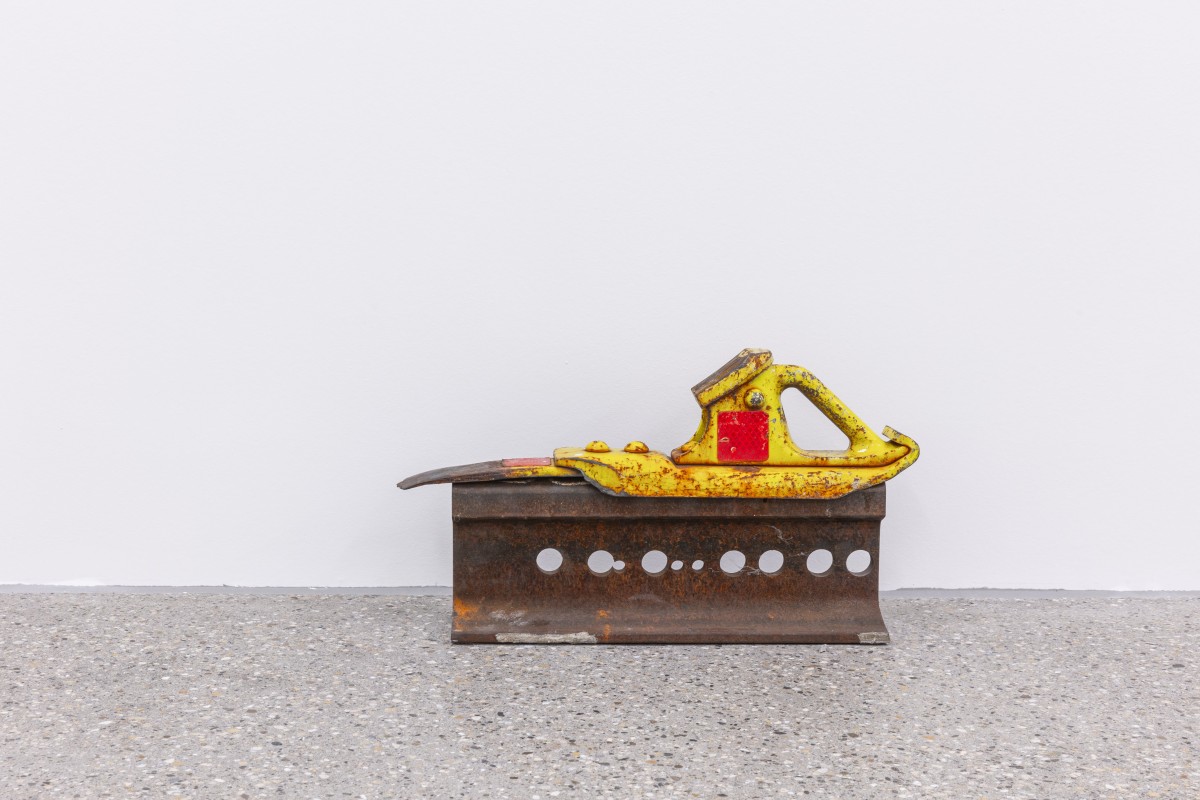
KVALEE, Amours Réels, 2023, installation, ballast, CFF panel, derail section and freight train brake, variable dimensions, photo : Théo Dufloo.
Finally, Tara Ulmann and Eva Ayache-Vanderhorst guide us into their own ritual. Alongside a shelf and a framed patterned paper, Tara Ulmann presents to the public a series of ten vials containing intimate letters that have been burned and then cut. Like a shelf in a cabinet of curiosities (a private collection with a popular-scientific character in 17th-century Europe, in particular), it naturally invites viewers to approach and trace the remnants, the fragments rescued from the flames.
The installation, composed of a light panel on which a painted canvas is placed, surrounded by metal spikes suspended from the ceiling, represents the artist’s relationship to divinatory arts. Eva Ayache-Vanderhorst reflects here her connection to the sensible world—the opposite of the visible. Close to the aesthetic of cave paintings, the artist evokes a return to the soul, to the authentic, as a rejection of the neoliberal excesses that our planet enforces today.
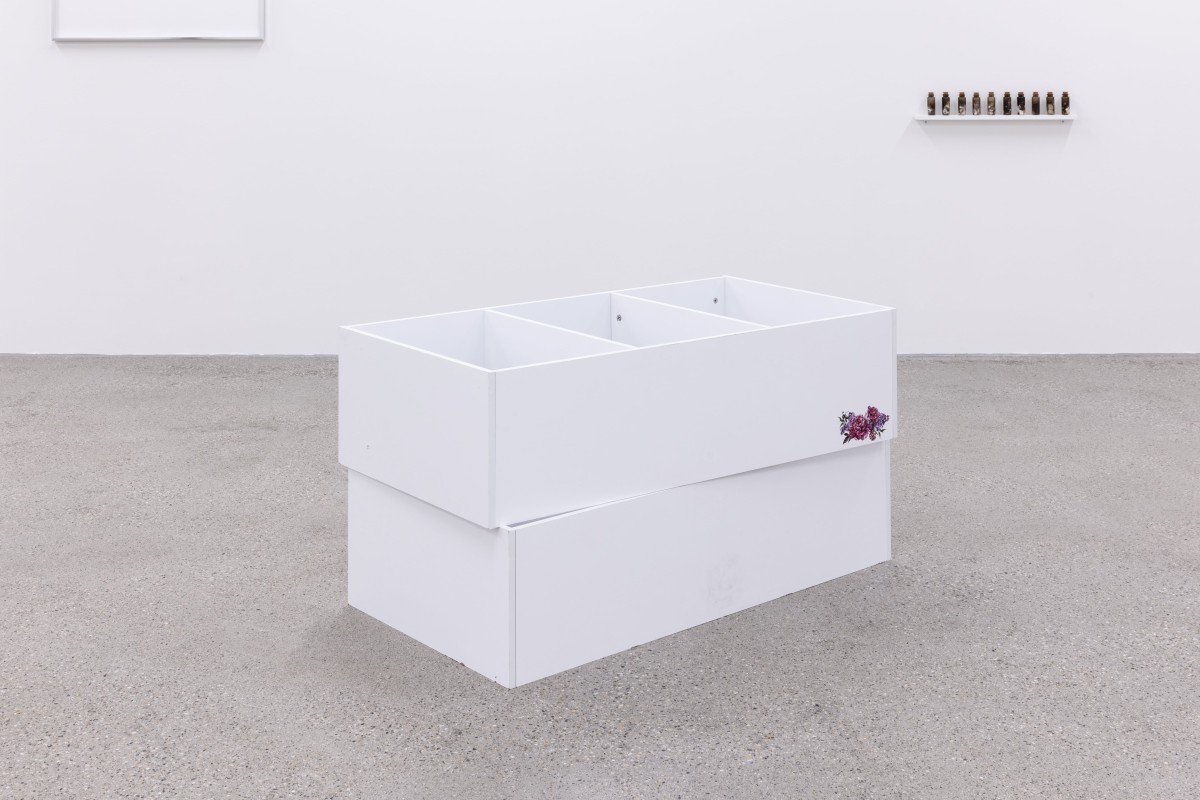
Tara Ulmann, Disclaimer (Theory of Desire), shelves, temporary tattoos, graphite pencil, 60 x 30 x 115 cm, photo : Théo Dufloo.
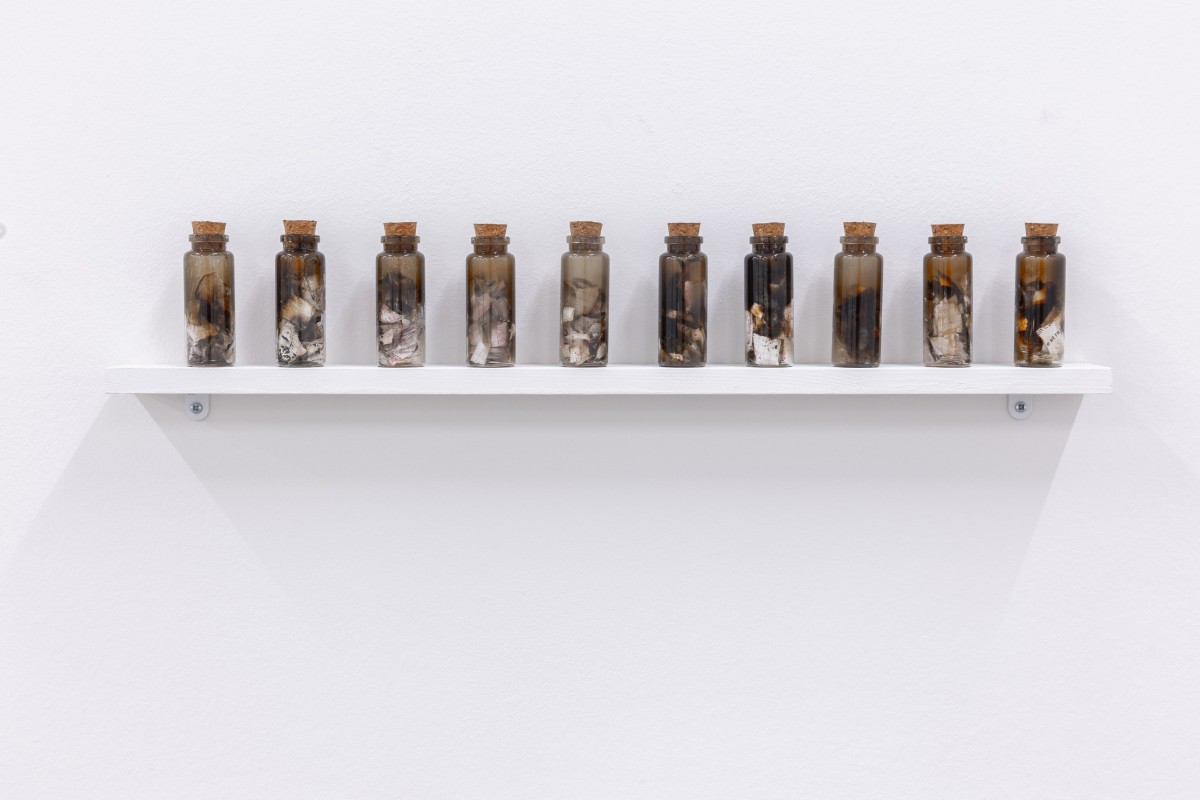
Tara Ulmann, Dear Deer Dire (Correspondances), glass, corks, graph paper, pink ink, sparklers, 3 x 8 x 1,7 cm, 10 items, photo : Théo Dufloo.
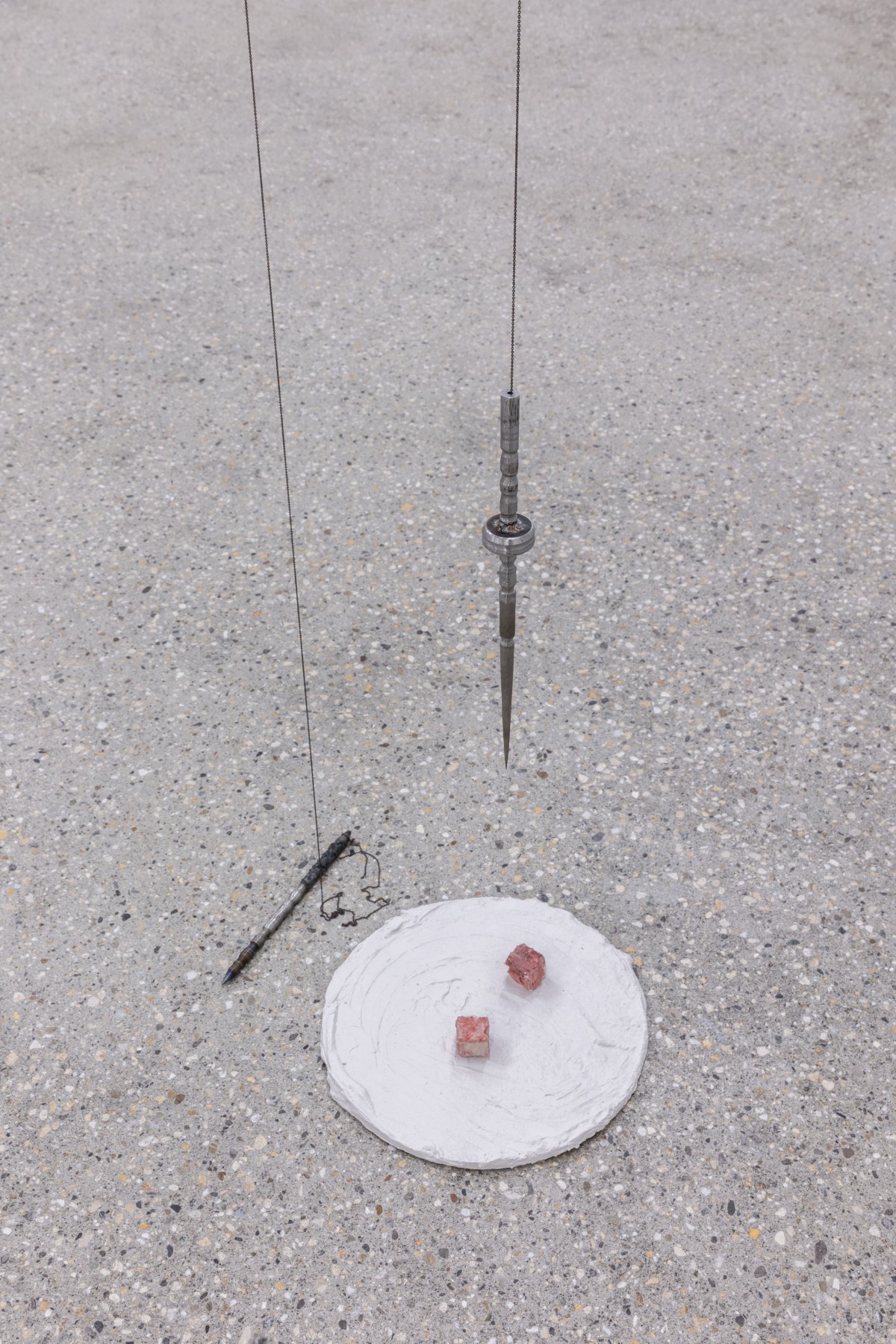
Eva Ayache-Vanderhorst, L’archéologue, la constellation, detail, 2023, installation, oil paint on linen, light panel, metal clocks, chains, plaster, polystyrene, variable dimensions, photo : Théo Dufloo.
The project “All my loved ones like to fight” was made possible thanks to the generous support of the City of Lausanne and Pro Helvetia.