F(r)ictions of Intimacy, curatorial carte blanche to Caroline Honorien
At the invitation of Oriane Emery & Jean-Rodolphe Petter
CALM – Centre d’Art La Meute invites Caroline Honorien, curator, art critic, and independent publisher based in Paris. We are pleased to give her carte blanche for the third exhibition of the 2023/2024 program entitled “Is there anything more thrilling than writing our own story?” F(r)ictions of Intimacy is a group exhibition featuring works by Mélissa Airaudi, Thelma Cappello, Soñ Gweha, Roy Köhnke, Luna Mahoux, and Pol Taburet. The artists featured in the exhibition live and work in the Paris region.

Exhibition view "F(r)ictions of Intimacy", 2024, CALM – Centre d'Art La Meute, photo : Théo Dufloo.
F(r)ictions: Through and Against, Caroline Honorien
F(r)ictions of Intimacy is an exhibition that sets in motion a series of relationships. It is first and foremost an attempt to exorcise a text that has accompanied me since its publication in 2019 and to which I constantly return, having long since taken the risk of drawing out and distorting its proposition.
The exhibition takes its title from a (quasi-)eponymous book by Keguro Macharia. The Kenyan author proposes to reflect on frottage from an Afro-diasporic and queer perspective. Frottage, as the author reminds us, is both a plastic art practice (to which the Surrealists gave its name in the last century) and an erotic practice. But this eroticism is not only that of sexual relations, it is also that of poetry and transmission, as Audre Lorde urges us to do.
Macharia, undoubtedly haunted by ghostly texts himself, refers in his introduction to an episode from Alex Haley's Roots. This book, which has also been adapted into a series, tells the story of Kunta Kinte, an African captive who became a slave in the United States and whom Haley claims to be his ancestor. The passage quoted by Macharia describes Kunta Kinte's transfer. Lying in the darkness of a ship's hold, he hears the groans of pain and the murmurs of rebellion from his companions in misfortune. He feels them, his skin against theirs, all connected by iron chains that damage and wound their flesh. In this “monstrous promiscuity,” as Macharia puts it, the modalities of haptic friction unfold: through and against bodies, spaces, geographies, and temporalities, relationships are formed.
The concerns of the artists in the exhibition may seem, at first glance, far removed from those of Macharia. However, she reactivates the haptic grammar of minority relationships.
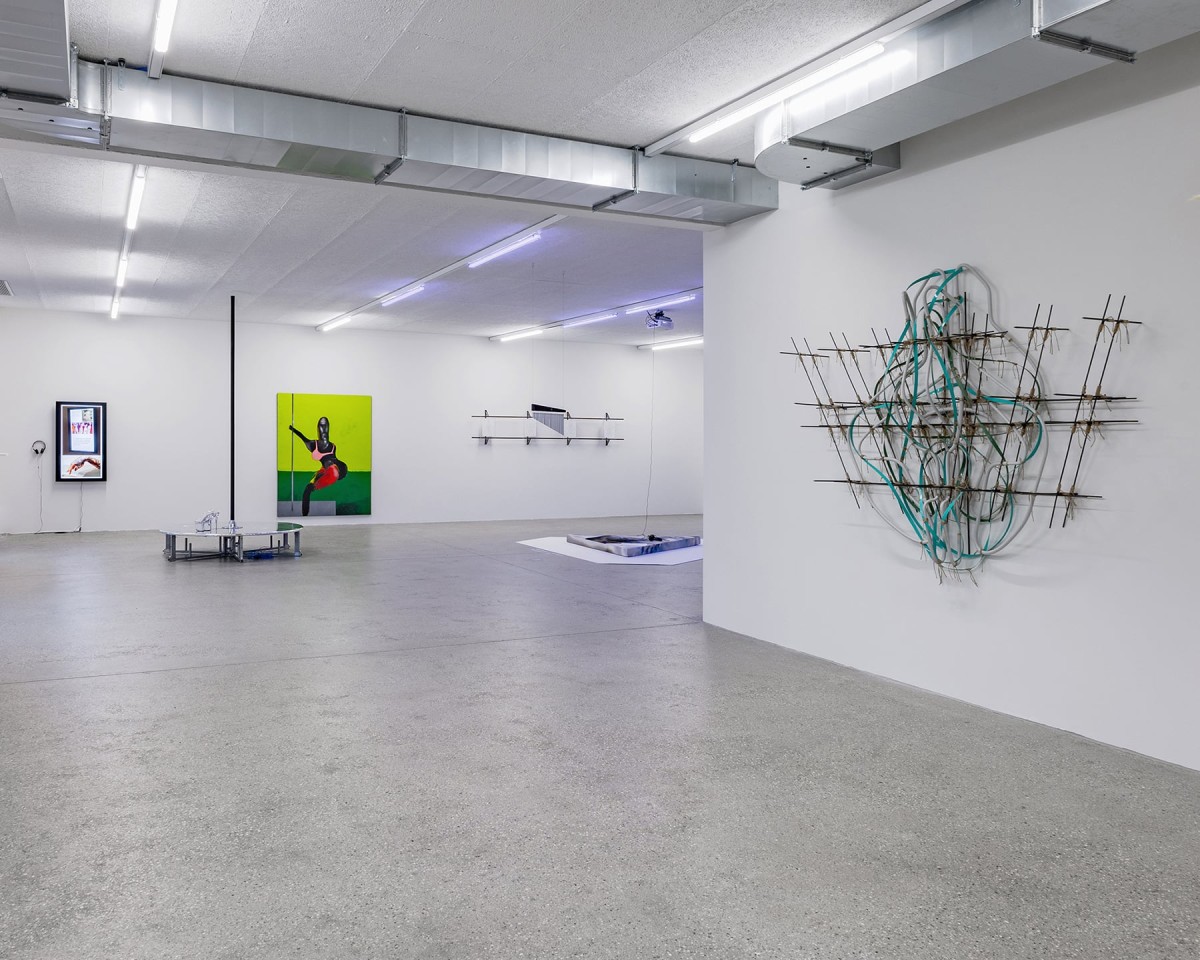
Exhibition view "F(r)ictions of Intimacy", 2024, CALM – Centre d'Art La Meute, photo : Théo Dufloo.
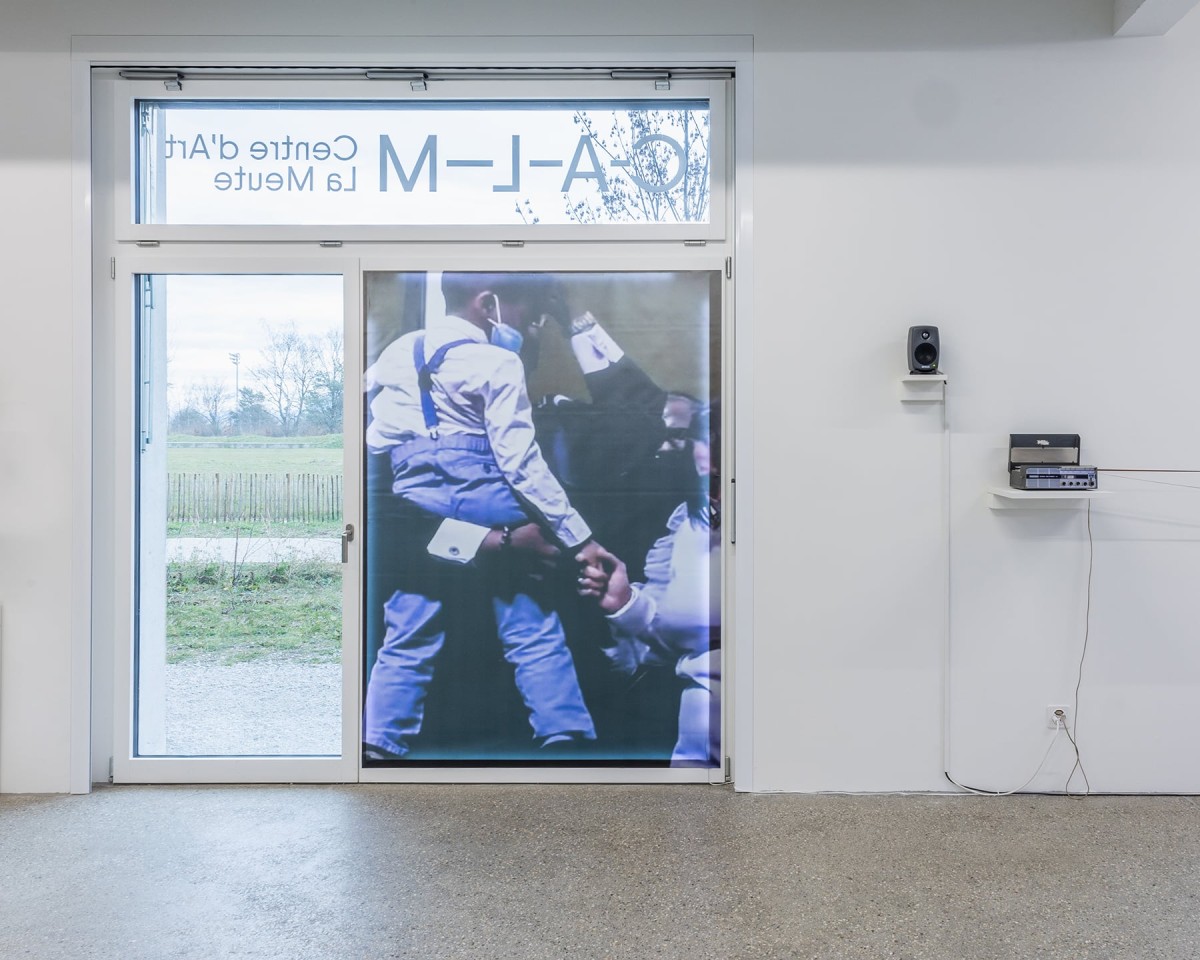
Luna Mahoux, Untitled, prints on tarpaulins, 2024, photo : Théo Dufloo.

Luna Mahoux, Untitled, prints on tarpaulins, 2024, photo : Théo Dufloo.
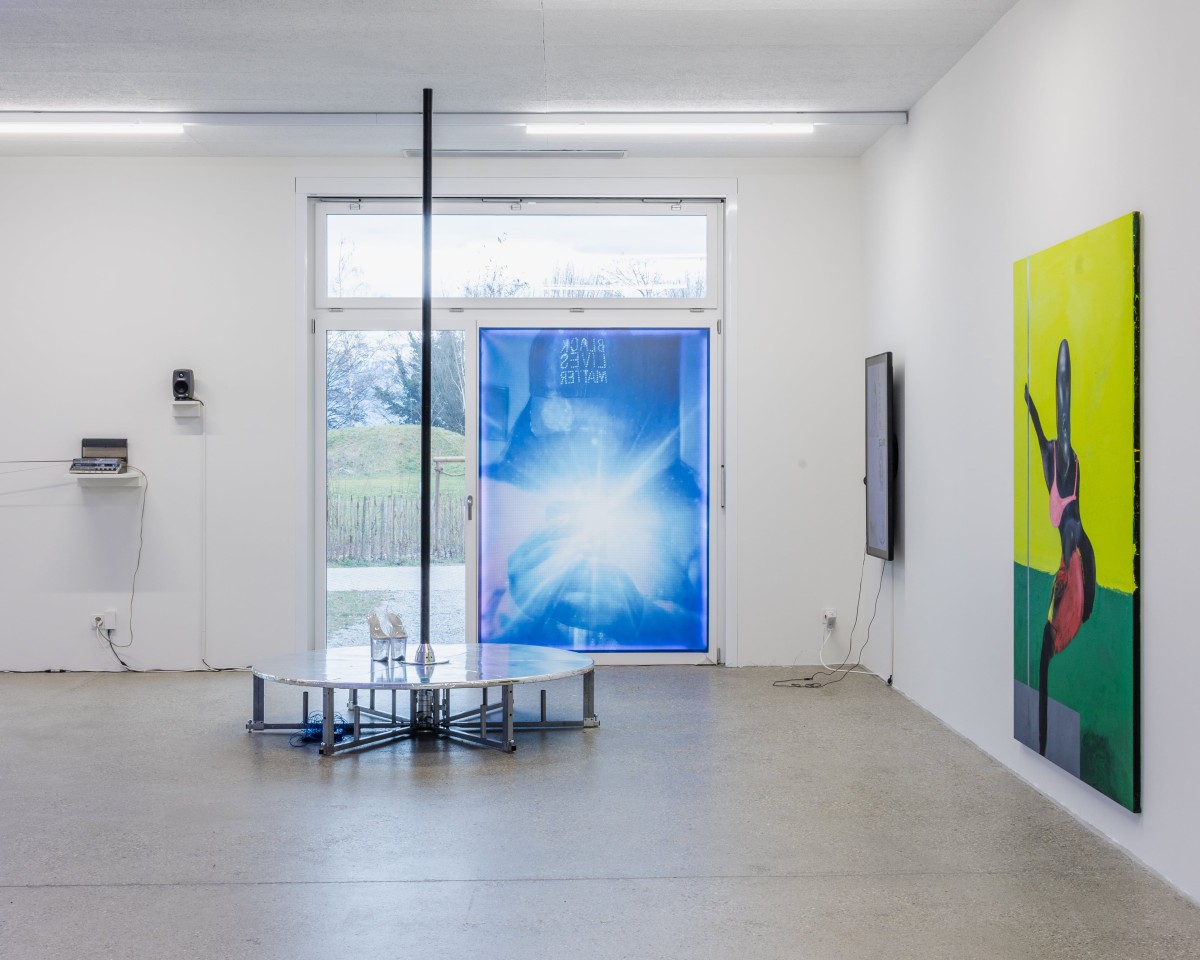
Luna Mahoux, Untitled, prints on tarpaulins, 2024, photo : Théo Dufloo.
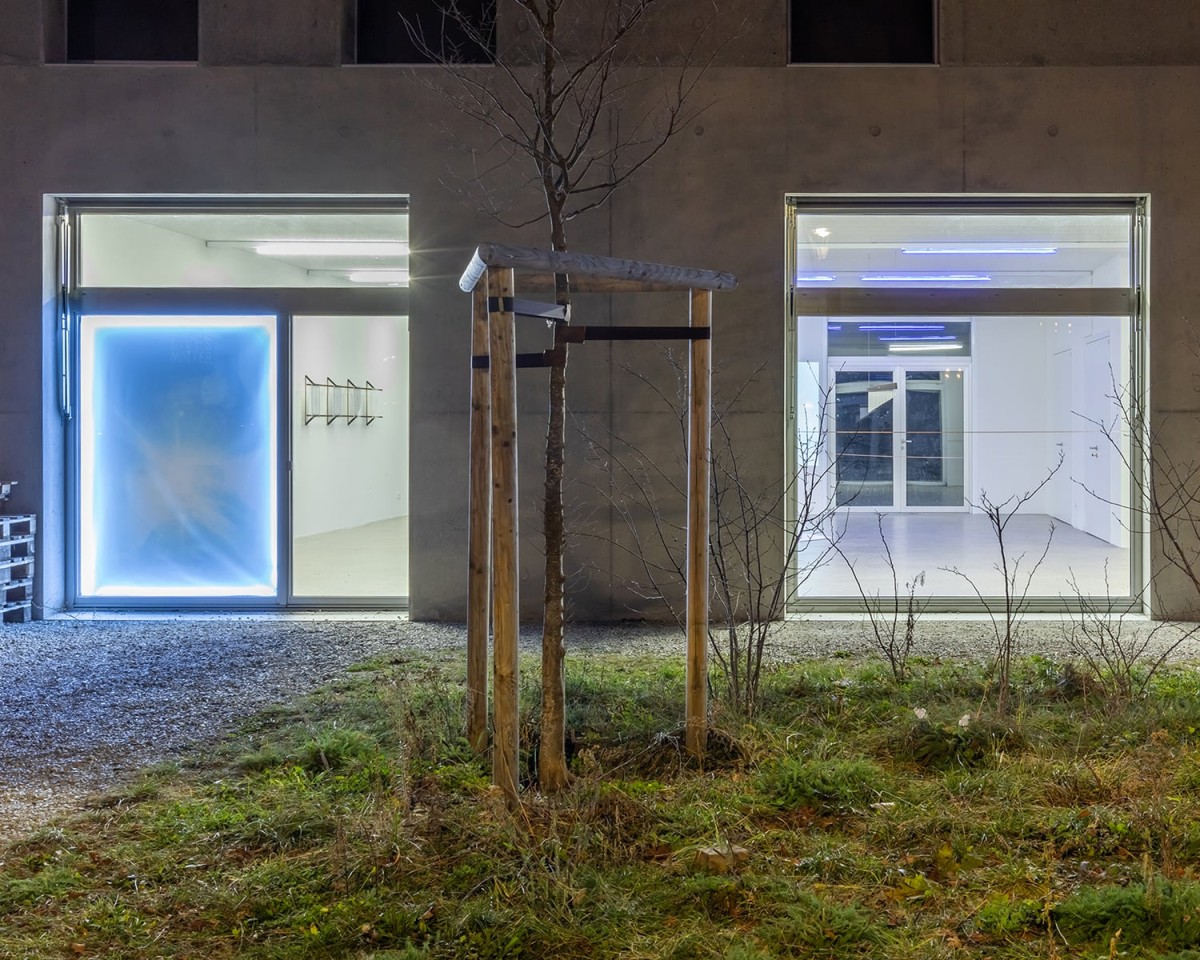
Luna Mahoux, Untitled, prints on tarpaulins, 2024, photo : Théo Dufloo.
It took me a few years to meet Roy. But his works have stayed with me ever since I saw them at the Cité des Arts in Paris. His open, clinical flesh, piles of plaster, tubes, and steel were imprinted on my retina. They came back to me many times when I thought about the vulnerability of bodies that didn't fit the norm, those that people wanted to constrain, those that had to invent new ways of being, of constructing themselves, of revealing or concealing themselves. From a speculative and queer perspective, this work served as both a counterpoint and a cross-section of my own questions about black (and queer) bodies and relationships that are at once sensual, communal, elective, or pirate-like (some would say “fugitive”). With their assembled and segmented exoskeletons, encircled and pitted with rust, Roy Köhnke's bodies echo Karen Barad's question: when we touch, “what is the distance that [...] separates? What is the measure of proximity?”

Roy Köhnke, Wall Land #1, IRL tube, strapping band, twine, beeswax, steel, 260 x 60 x 220 cm, 2023, photo : Théo Dufloo.
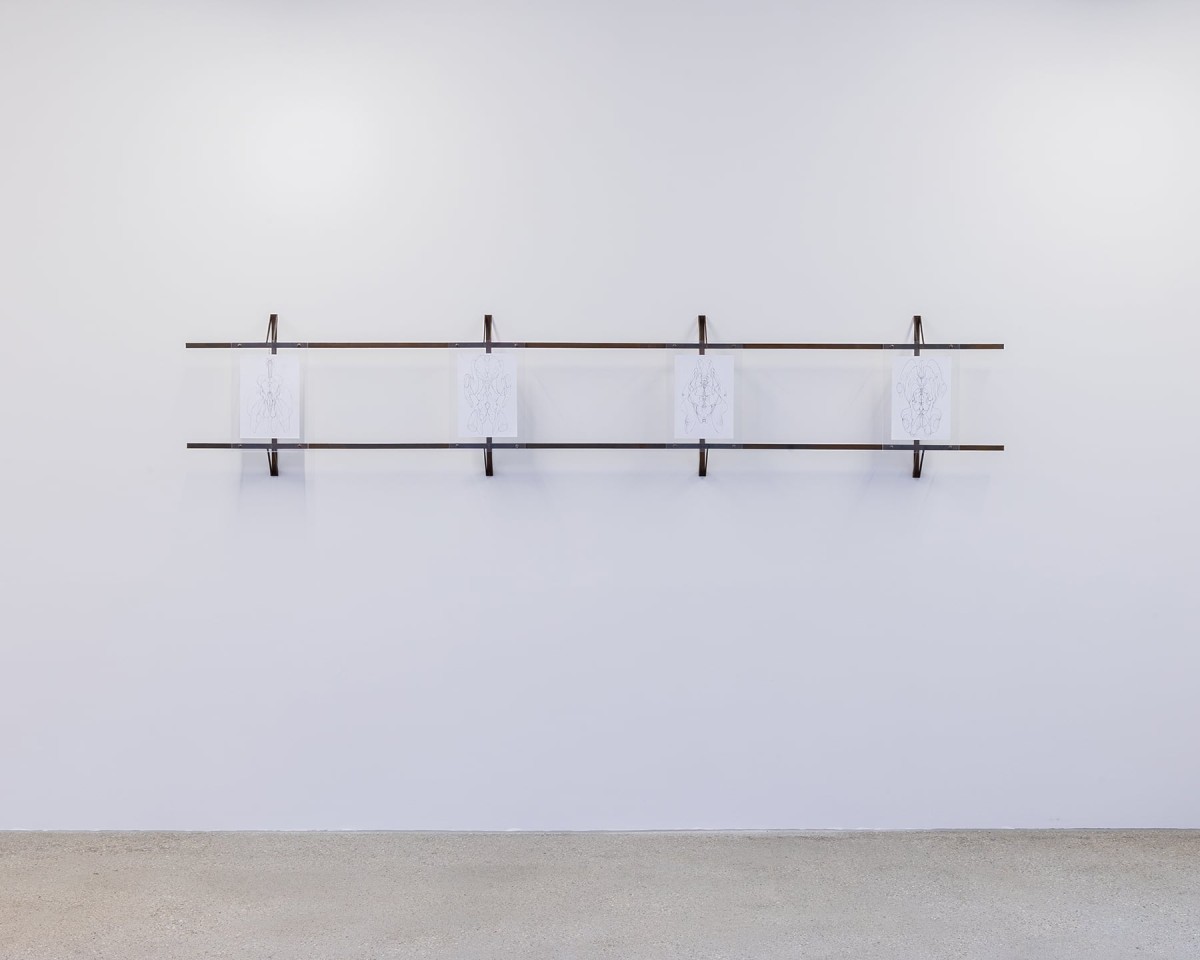
Roy Köhnke, Bugs waves (series), drawings on paper, 35 x 20 x 55 cm, 2021-2023, photo : Théo Dufloo.
Over the years, Thelma Cappello and I have traveled through different places: Paris 14, Noisy-Le-Sec, La Drôme. It was in the south of France that she read me an alternative version of the poem that brings together the words that resonate in this space. I had just explained to her how geographical and temporal friction, the way it allowed us to slip from one space-time to another, was the subject of an article I was trying to write about time and (in particular) music.
She told me about the place of wandering in her sound practice, how it had given her a taste for field recording. We talked about vinyl records and cassette tapes, black and brown, how Louis Sude-Chokei and Arthur Jaffa used them as media that completed the atomization of the black body through technology, separating it from its voice to turn it into a consumable object. And yet, they are charged with emancipatory politics depending on the hands that touch and assemble them. Rather than field recordings in nature or urban spaces, she sometimes offers ambient tracks with organic echoes that she has reconstructed from experiments and synthetic memories. A proposal recorded on cassette tapes that deteriorate and deform as words and time pass.
During the preparatory stages of the exhibition, as we were discussing the artists' needs and considering the space, a problem arose: both Soñ and Thelma's works required open sound (without headphones). Together, through conversation, we tried to think of ways in which the audio from the works could be combined. This attempt proved to be a failure once we were in the space. It was through discussions between Soñ and Thelma that the face-to-face approach became the obvious solution. A solution that allows the viewer to dive into Thelma's open sound, which clings to Soñ's images, before immersing themselves in the soundtrack of her video. In this anecdote, words, attentions, and gestures undoubtedly characterize Soñ Gweha's artistic project as much as the meditation they offer with Riding Apex: as a visual artist and DJ, their production mobilizes speculation, seeks to bring out collective spaces, spaces where one can invest with confidence and rest.
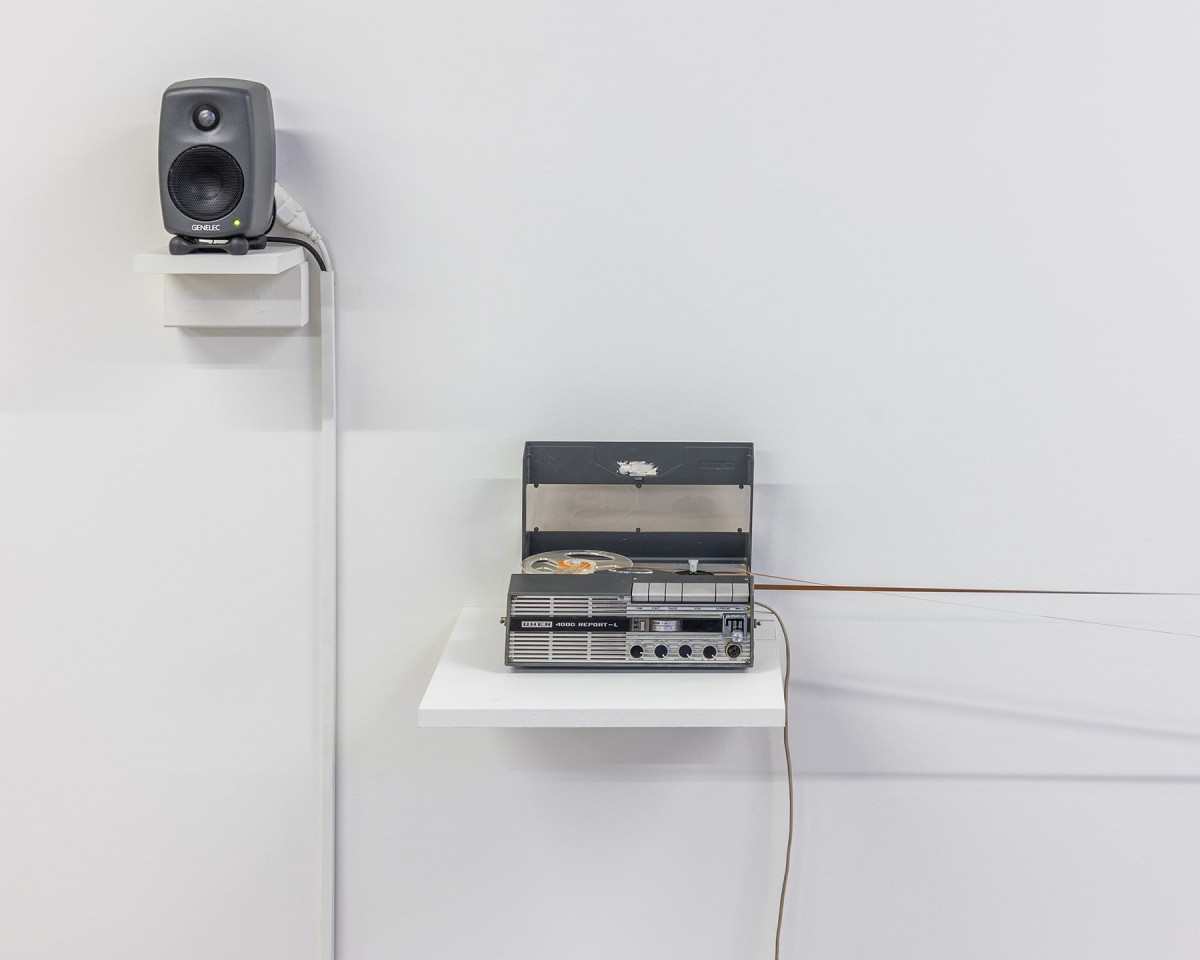
Thelma Cappello, Untitled, detail, tape recorders, cassette tapes, voice, soundtrack, 2024, photo : Théo Dufloo.
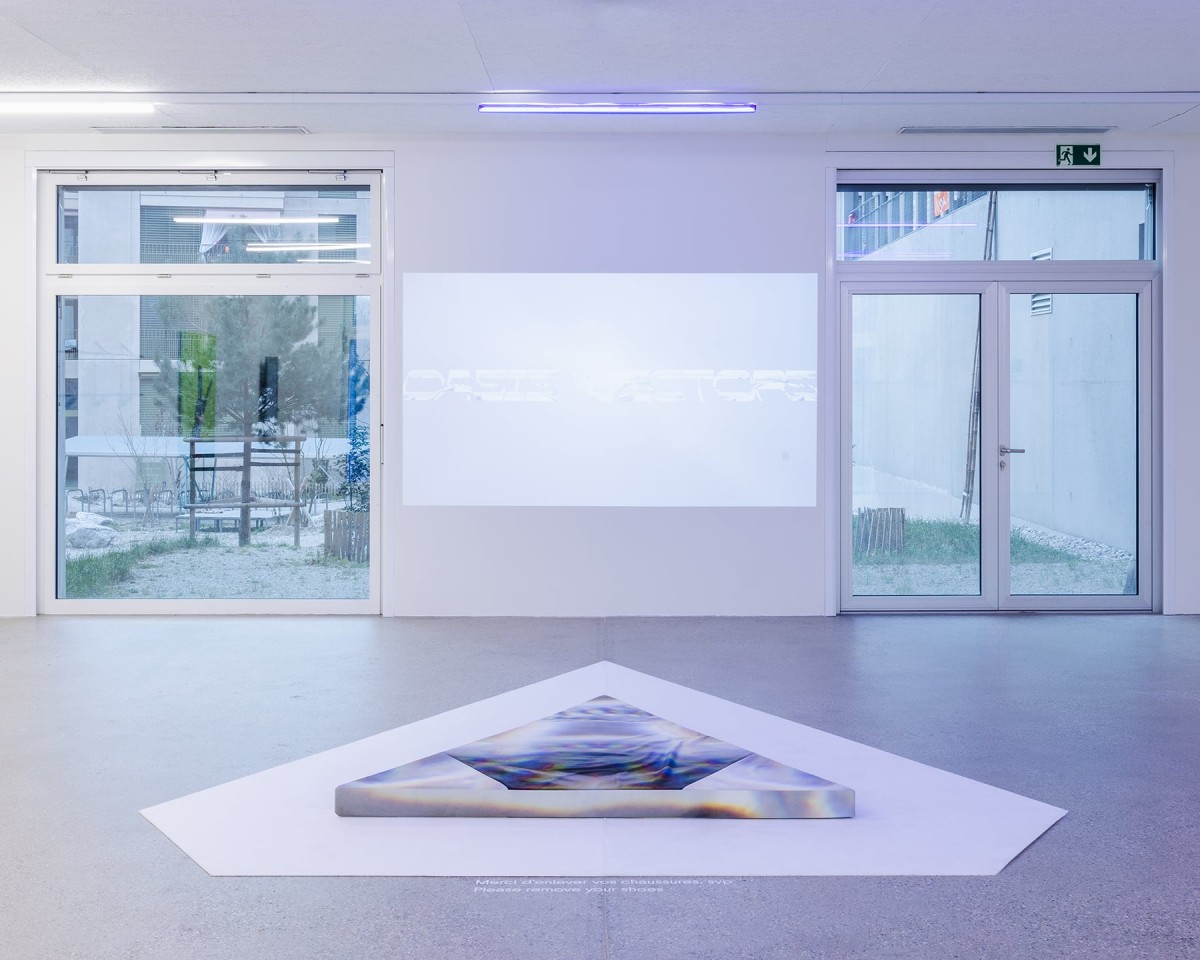
Soñ Gweha, RIDING APEX (OASIS VECTORS), video, triangular cushion, and chime, variable dimensions, 2023, photo : Théo Dufloo.
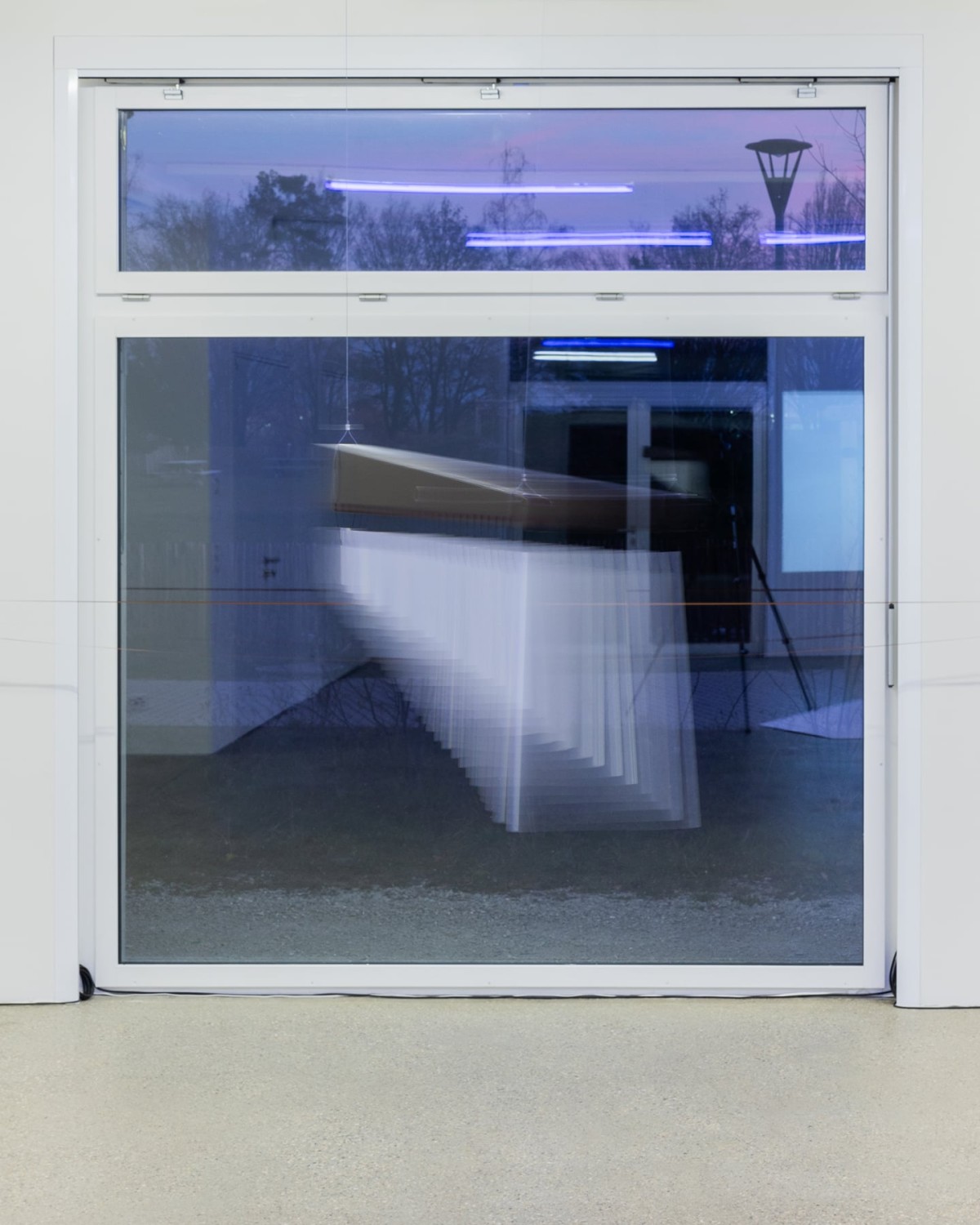
idem.
For a little over a year, Pol and I occupied two adjoining studio spaces. To reach him in his studio, you had to pass through a curtain. I saw him bring forth from the black surface of these paintings the iridescent and magical figures that haunt them and seem to move from one painting to another, like so many discreet and monstrous figures. Black figures, both celestial bodies and reflections of rippling water, reminiscent of the magical-religious souk-ougnan (“monsters of the night”) of Guadeloupe. Black bodies like stars that elude us while spying on us. “Monstrous black flesh” that rejects performance and draws us into Baconian worlds, disturbing and sharp with their bright, primary colors.
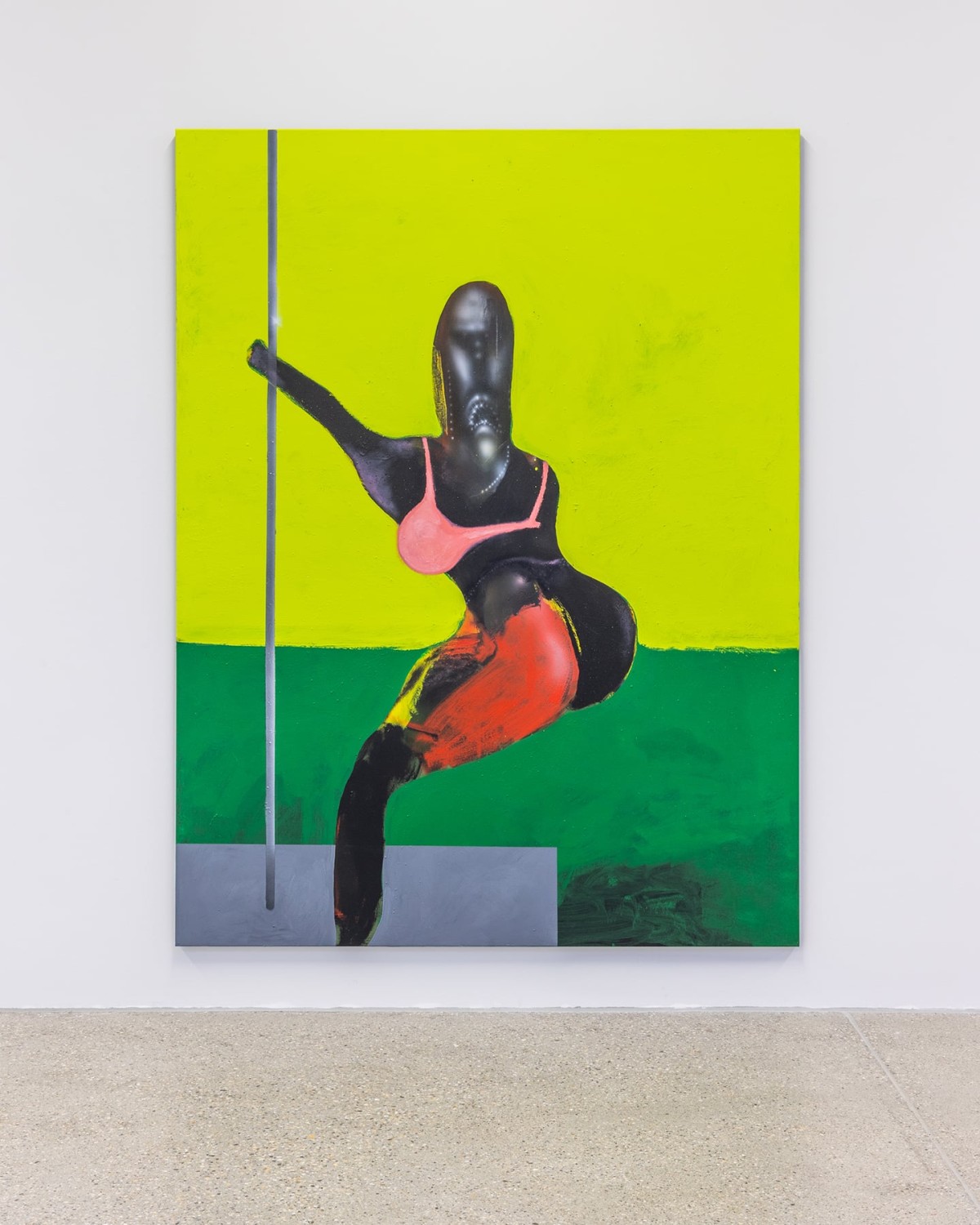
Pol Taburet, The Stripper, oil, acrylic, alcohol on canvas, 200x160 cm, 2023, courtesy of Mendes Wood DM and Fondation Lafayette Anticipations, photo : Théo Dufloo.
My words and Melissa Airaudi's images coexist silently a few pages apart in a book published following an exhibition held at Mecènes du Sud in 2021. So I only knew her work through the descriptions and images that people had kindly shared with me until I finally saw a performance. Her work on narratives and archetypes, particularly around black and female bodies, immediately caught my attention: her perspective on the persistence and reactivation of these images is delightfully (ir)relevant in a world of social media and screens like ours. Above all, her work reflects on performance in all its dimensions: the frictional history between the gaze, technology, and the Black body; labor, particularly from the perspective of striptease; and the circulation of archives, art, and content.
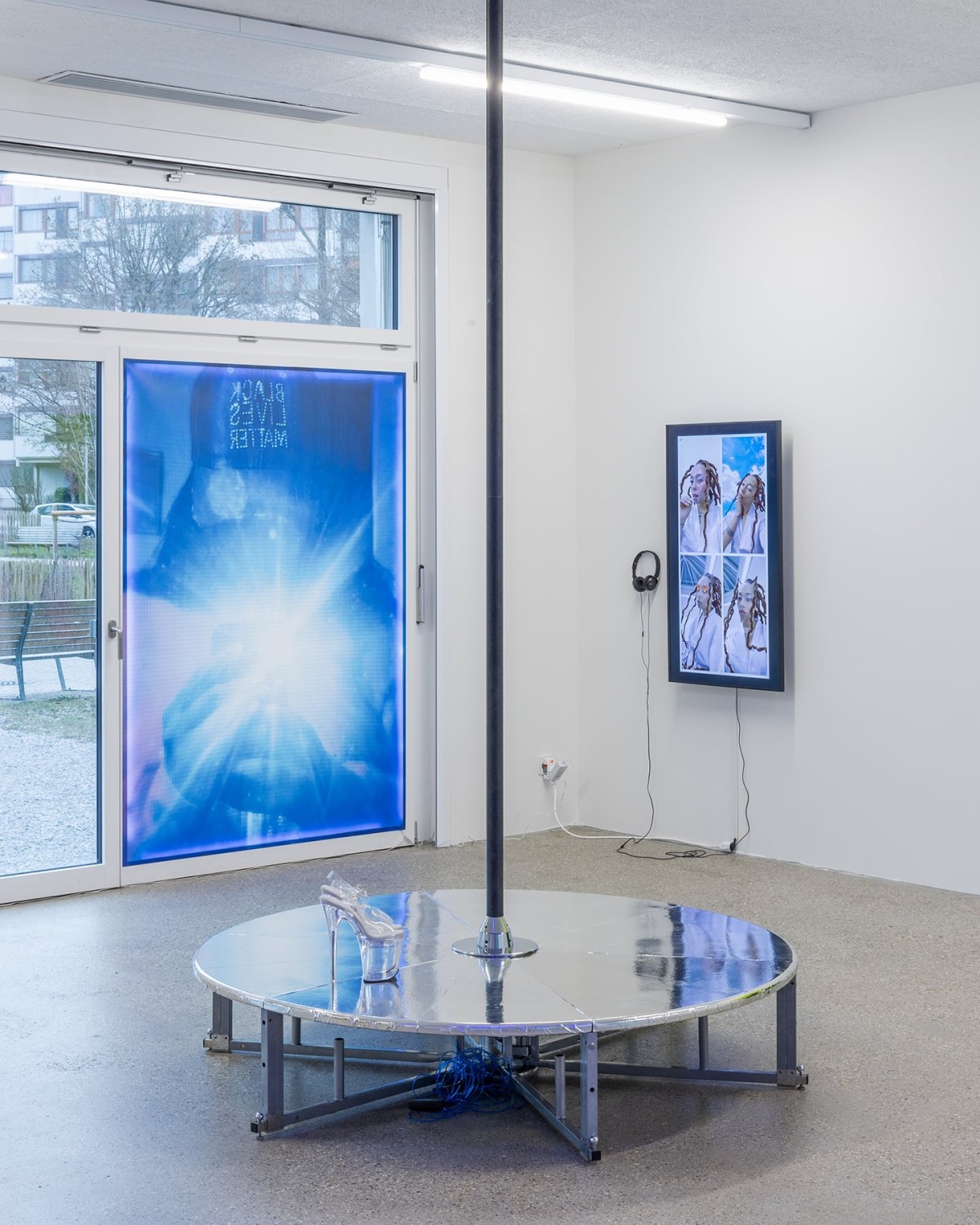
Melissa Airaudi, Commençons par la disparition du réel, installations, video, pole dancing, 2021, photo : Théo Dufloo.
I met Lydia, my assistant, in a house that was sort of ours for a year. Even back then, she was driven by a desire to nurture her relationships, whether they were friendships or simple encounters after performances. It is often said that curating means taking care of artworks. Above all, it means taking care of relationships (interpersonal and spatial) with and between artists, with and between the institution—Lydia is the kind of assistant who knows how to take care of this and create the spaces we were all able to inhabit together during the preparation of this exhibition.
I would like to thank Noémi Michel, whose collection of anecdotes, real or imagined, was inspired by her podcast.
The project “F(r)ictions of Intimacy” was made possible thanks to the generous support of the City of Lausanne, Pro Helvetia, Loterie Romande, the Canton of Vaud, the Leenaards Foundation, and the Françoise Champoud Foundation.